Skip to Content

Who Designs our (digital) (next) (uncanny) (interfacing) Lifeworlds?

Praxis↭theory Seminars at the Hildesheim Faculty of Design Examine Current Interface Cultures and their Opaque Spheres of Production

Qualitative Design Research and Critical Design Praxistheory at the Nexus of Culture, Interfaces, and Strategy at the M.A. Gestaltung program Faculty of Design, HAWK University of Applied Sciences and Arts (Hildesheim, Germany)

Tina Böse/Lea Sofia Fichtner: “Scarfolk: Housewives, Syringes, and Plush Teddies.” (2024)

Summary of the research poster

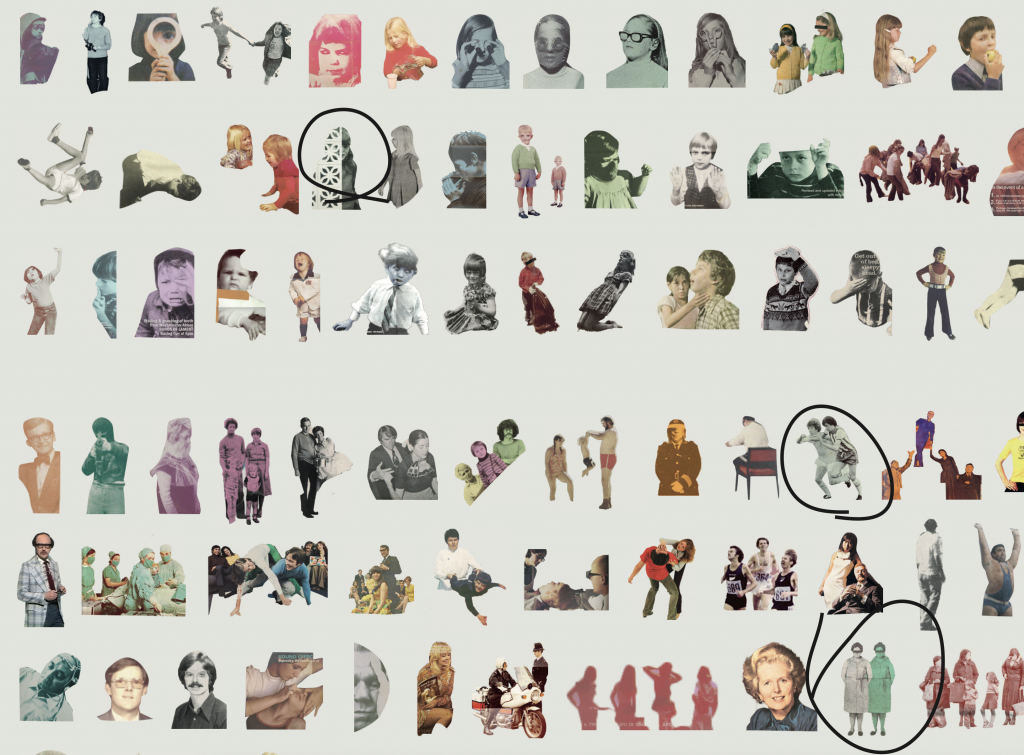
The poster analyzes the online art project Scarfolk Council, a fictional English town created by Richard Littler and presented through posters, brochures, warnings, and “official” communications styled like 1970s public information campaigns. The research shows how Scarfolk builds an unsettling, satirical dystopia by looping the 1970s indefinitely and blending nostalgic design with horror, bureaucracy, and political absurdity. Drawing on archival aesthetics, Photoshop collage, and dark humor, Littler creates objects that feel authentic yet disturbing, deliberately blurring the boundary between realism and science fiction .

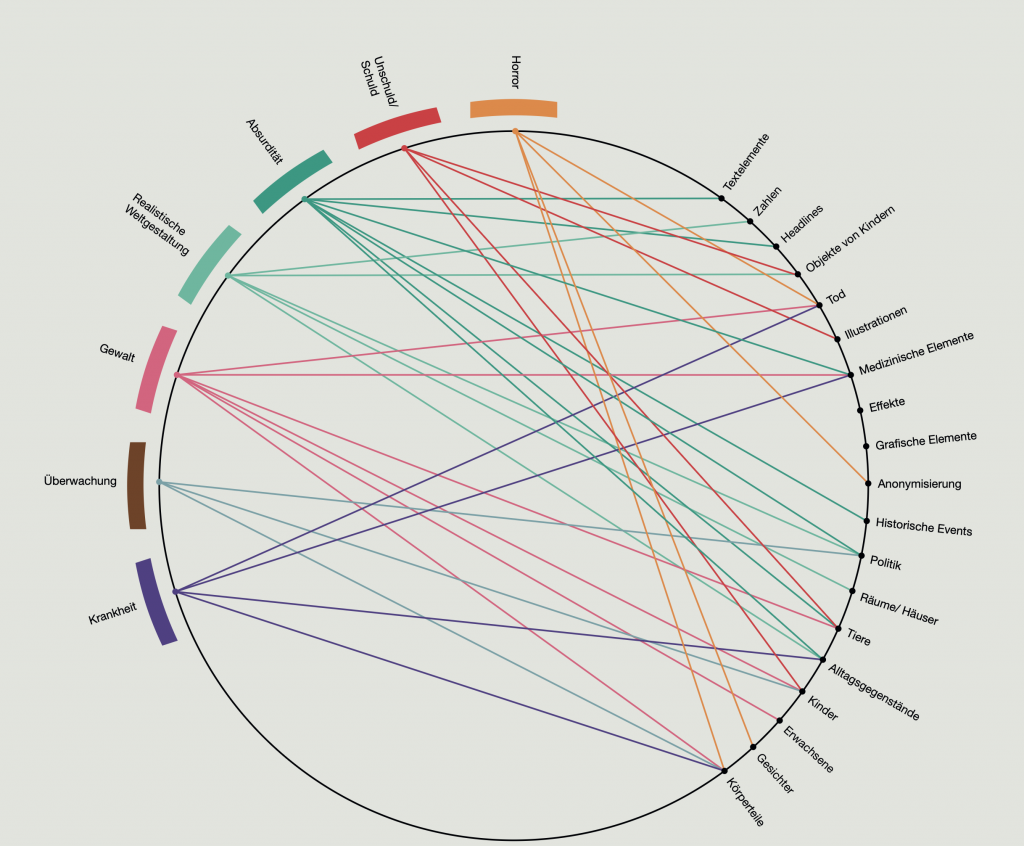
Methodologically, the authors collect and dissect many Scarfolk artifacts and sort their visual and textual elements into categories (such as children, body parts, animals, domestic objects, medical motifs, politics, or typography). From this material, they derive several recurring “design formulas”:

  • 1970s retro aesthetics used as a vehicle for unease,
  • horror-film strategies like doubling and repetition,
  • familiar objects made uncanny through grotesque alterations,
  • a fabricated state aesthetic with logos, official language, and instructions, and
  • provocative headline–subline pairings that intensify the images’ impact.

These mechanisms are mapped to broader thematic fields—horror, innocence/guilt, absurdity, realism, violence, surveillance, and illness—showing how small visual or textual shifts transform everyday motifs into sources of anxiety .

In its conclusion, the poster argues that Scarfolk functions as both entertainment and cultural critique. By weaponizing nostalgia and bureaucratic design, the project mirrors contemporary political fears, xenophobia, and media rhetoric while provoking uneasy laughter and self-reflection. The systematic breakdown of Littler’s techniques reveals how a coherent fictional world can emerge from repeated graphic formulas—and how design can mobilize affect, satire, and dread to comment on present-day society .
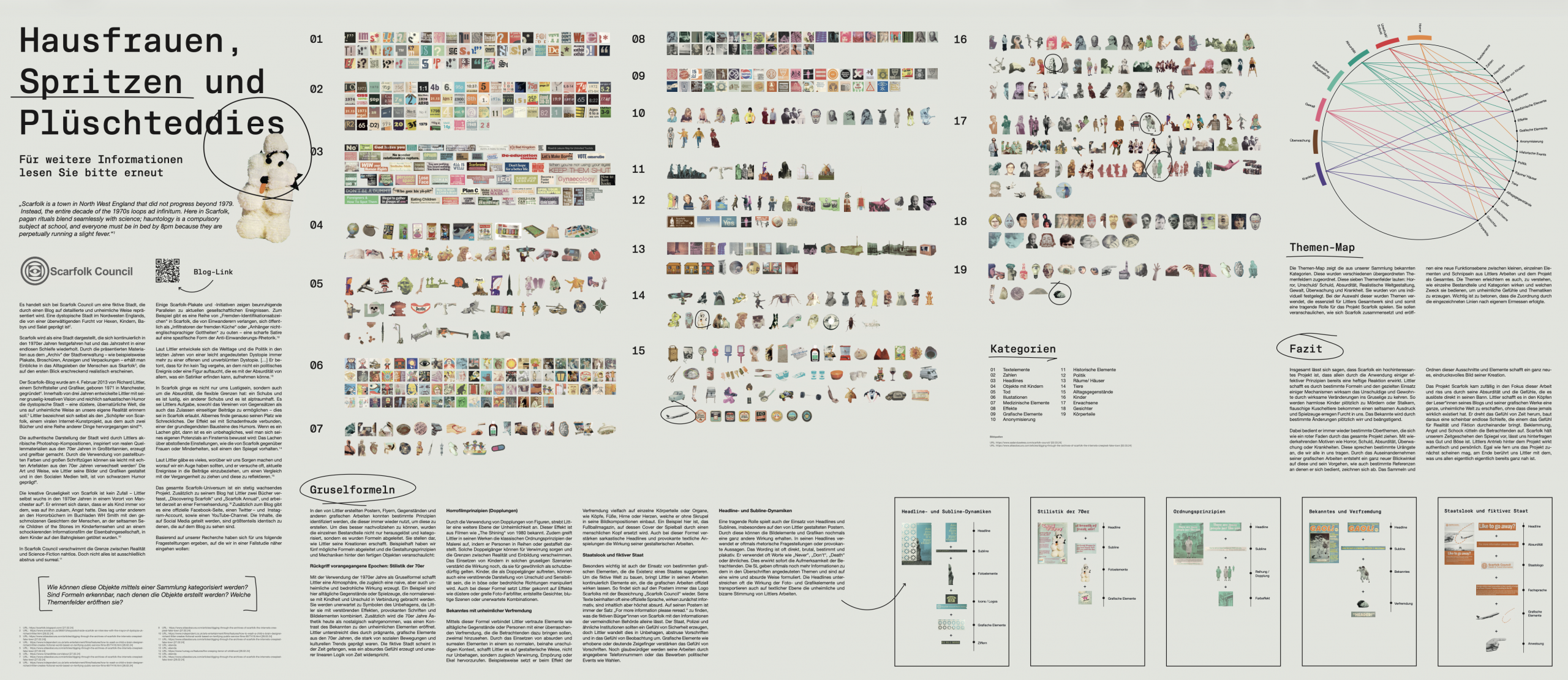
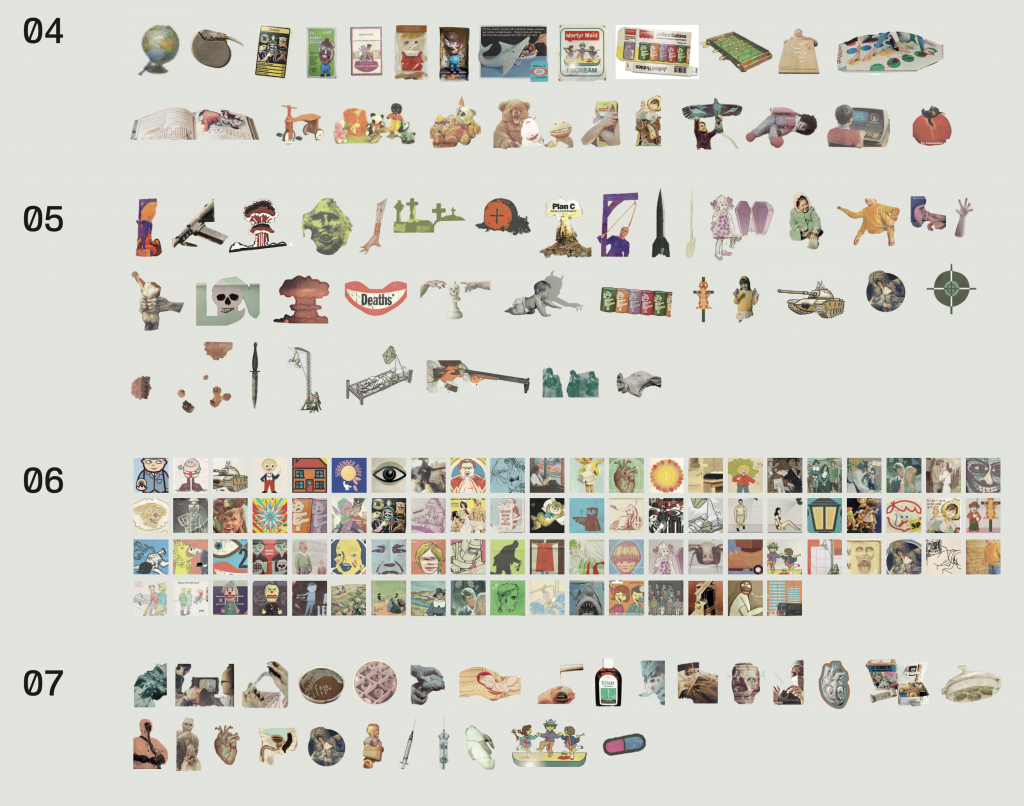
Tina Böse/Lea Sofia Fichtner: Scarfolk: Hausfrauen, Spritzen und Plüschteddies

Seminar work 2024
supervised by: Prof. Konstantin Haensch
Latest

Lea Sofia Fichtner: „Content Strategies for Jazz on TikTok – Design Research on the Visibility of Artistic Practice in Jazz“ (2026)
[Research through Design], Communications, Design Strategy, Entrepreneurship, Innovation, Interface Cultures, Marketing, Music, Narration, Post-Branding
This master’s thesis investigates how content strategies on TikTok can contribute to the visibility of artistic practice in jazz. Situating TikTok within the broader digital transformation of music cultures, the study examines how platform logics, algorithmic structures, and short-form video aesthetics reshape the conditions under which jazz musicians can present their work. Rather than focusing […]
Read More
Februar 22, 2026

admin

Ina Szczepanski: „Concepts Trouvés: Design in an Intercultural Context – Making Research Through Design Tangible and Visible“ (2026)
[Cartography], [Design Critique], [Design Ethnography], [Research through Design], Consumer Culture, Interface Cultures, Marketing, Post-Branding, Urban Studies
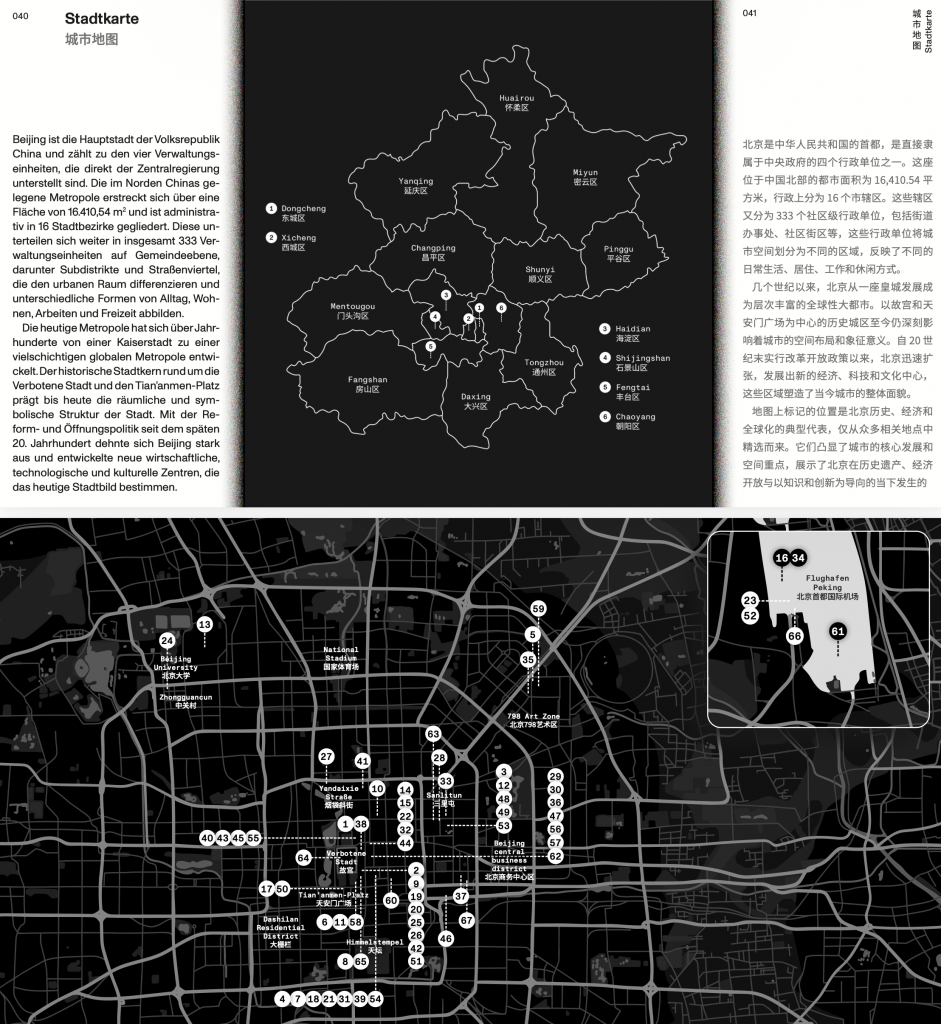
This master’s thesis investigates how design can function as a research practice that makes knowledge in intercultural contexts visible and experientially accessible. Based on the project Concepts Trouvés, which examined English-language terms found in Beijing’s urban commercial landscape, the work reflects on how design ethnography and Research through Design can explicate implicit knowledge embedded in […]
Read More
Februar 22, 2026

admin

Isabelle Wydra: „The Male Gaze: Patriarchal Structures in Everyday Life and Design Processes with Reference to Product Design“ (2025)
[Cartography], [Design Critique], Consumer Culture, Gender/Queer, Post-Branding
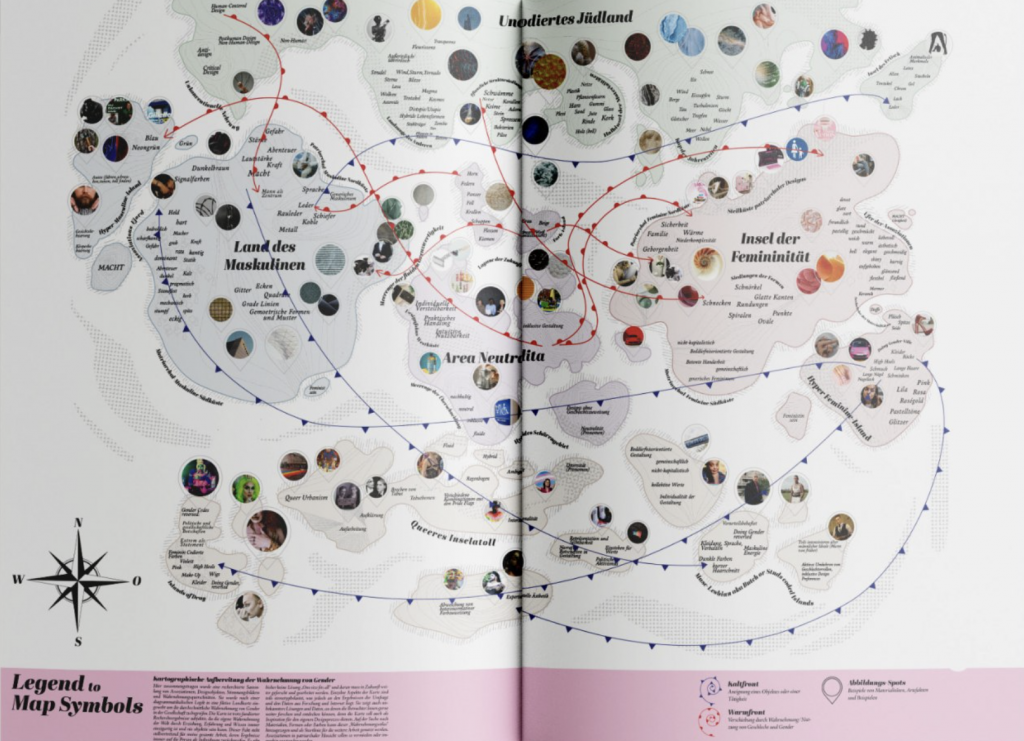
This master’s thesis investigates how patriarchal structures and gender stereotypes are embedded in everyday products, spatial environments, and professional design processes. Combining feminist theory, sociological concepts such as Doing Gender, and contemporary design research, the project analyzes historical genealogies of gendered form, materiality, and usability while grounding these perspectives in an empirical user survey. The […]
Read More
Januar 24, 2026

admin