Skip to Content

Who Designs our (digital) Lifeworlds?

Investigating Everyday Interface Cultures and Hidden Spheres of Production in M.A. Seminars at HAWK Hildesheim: Design Management, Design Strategy, and Research through Design (RtD)

Research at the M.A. Gestaltung program, Faculty of Design,
HAWK University of Applied Sciences and Arts (Hildesheim, Germany)

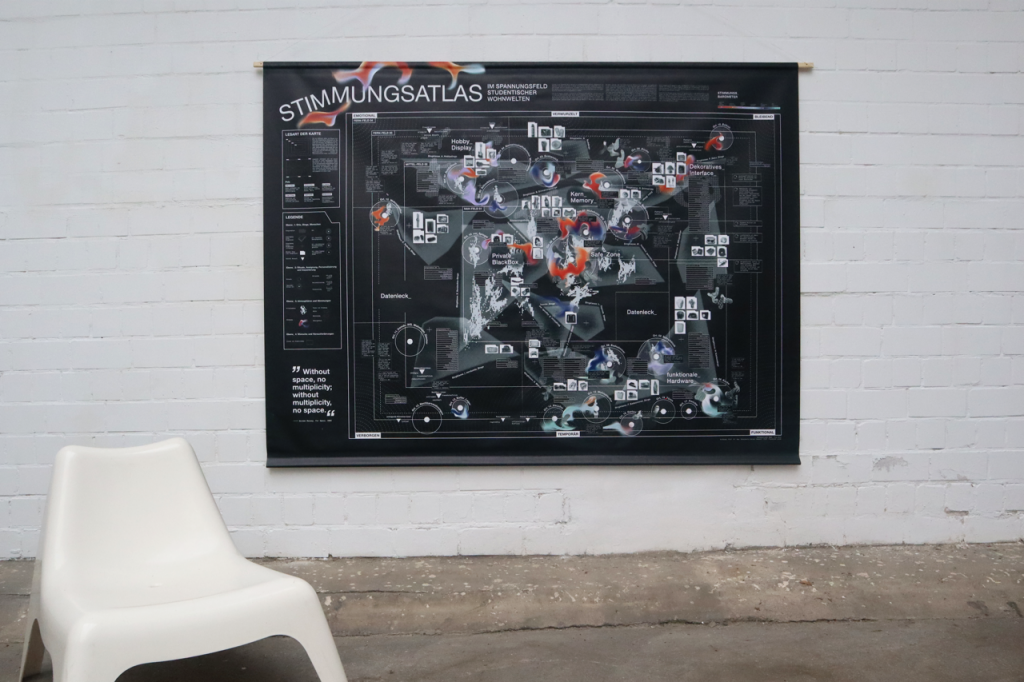
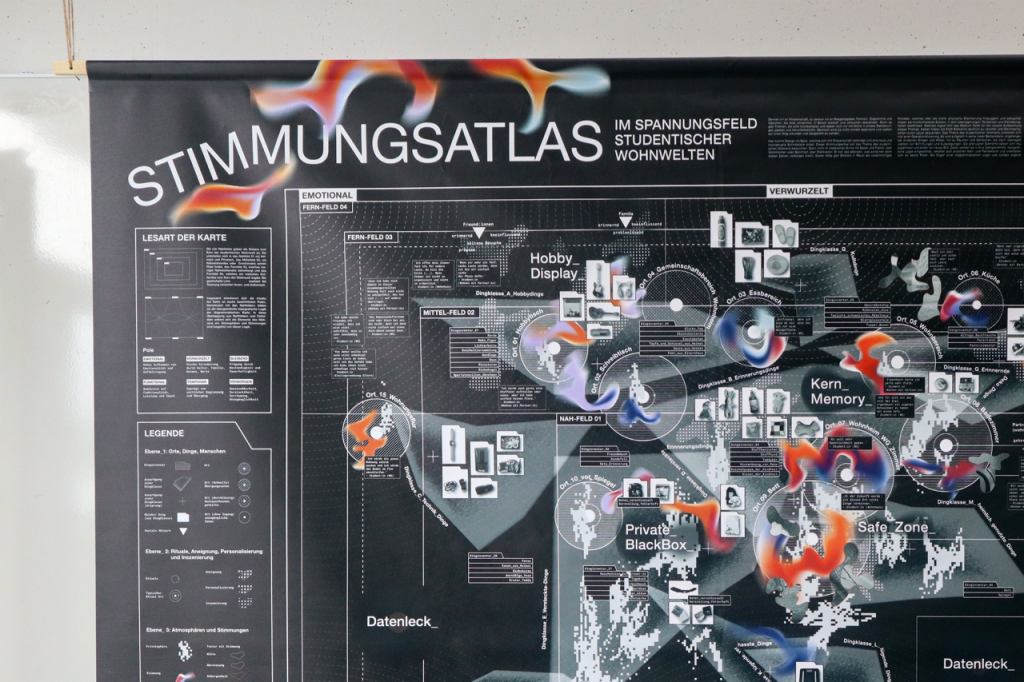
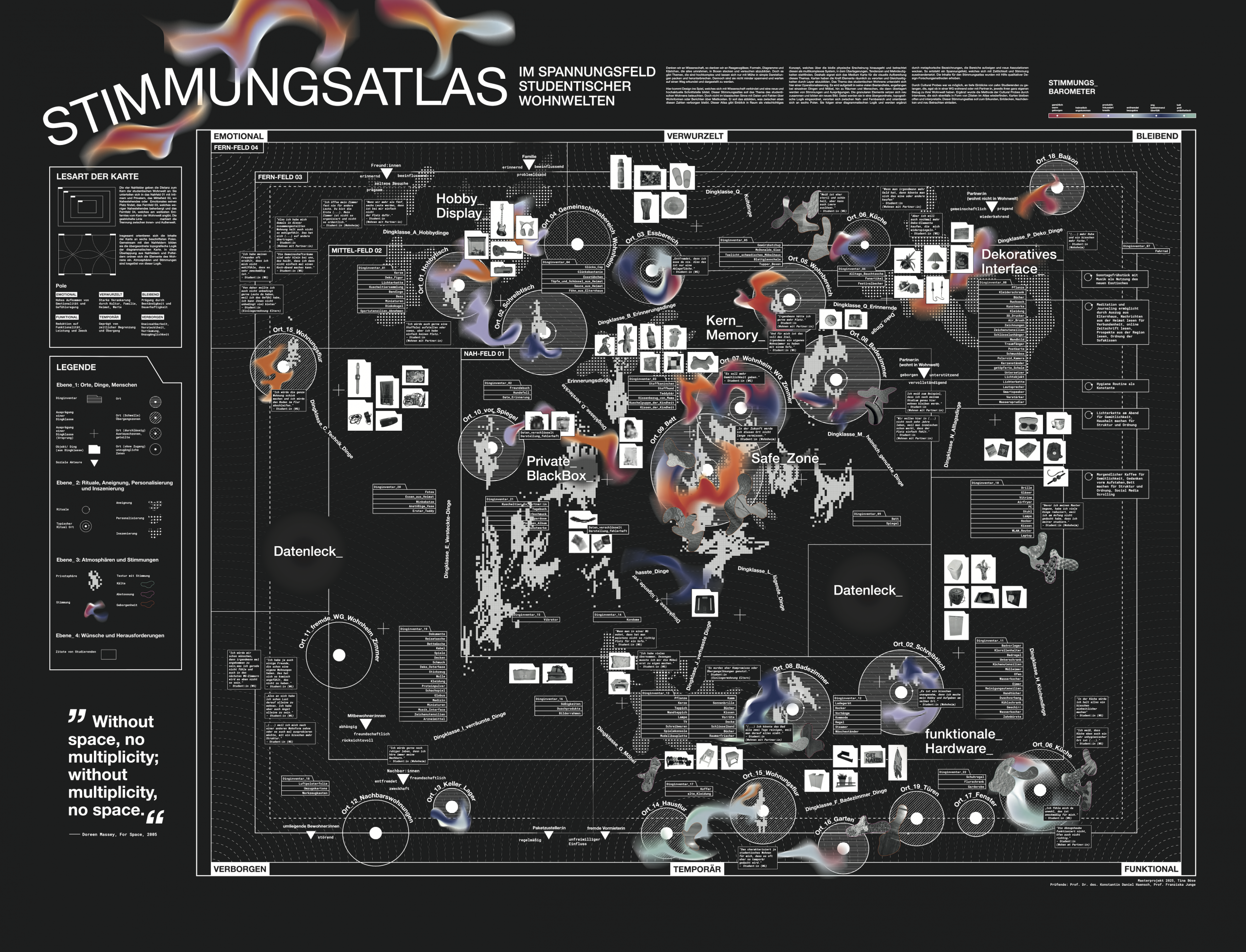
Tina Böse: „Mood Atlas in the Tension Field of Student Living Environments“ (2025)

When we think of science, we often picture test tubes, formulas, diagrams, and boxes—frames that contain, categorize, and attempt to represent the world. Yet some topics are highly complex and resist being reduced to simple visualizations. They demand effort to be made legible—and remain no less compelling for it, waiting to be explored and articulated through alternative means.

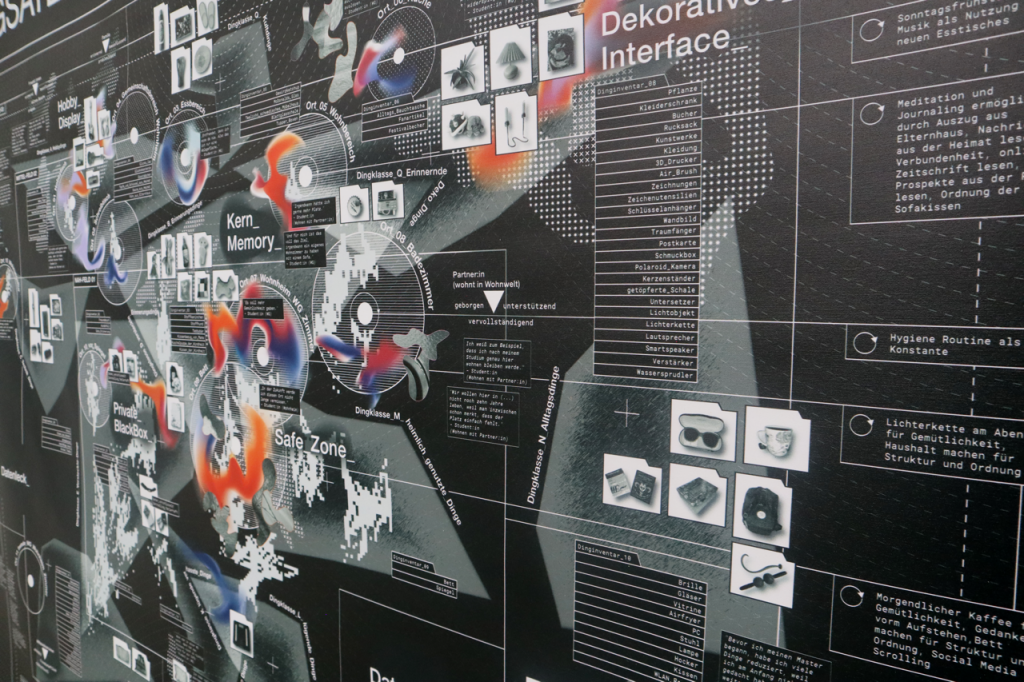
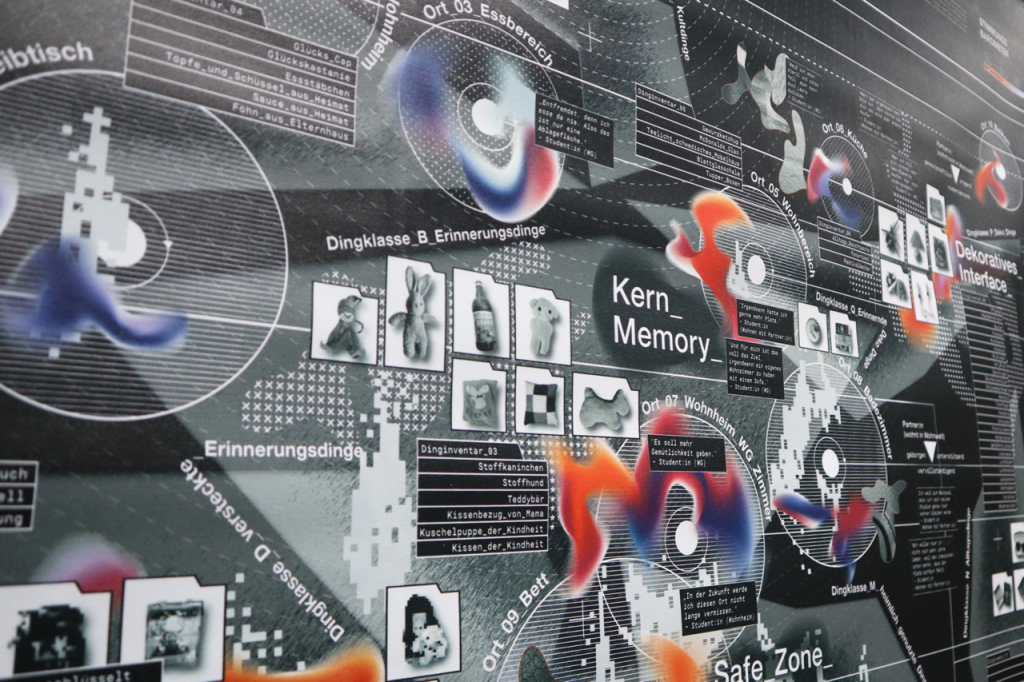
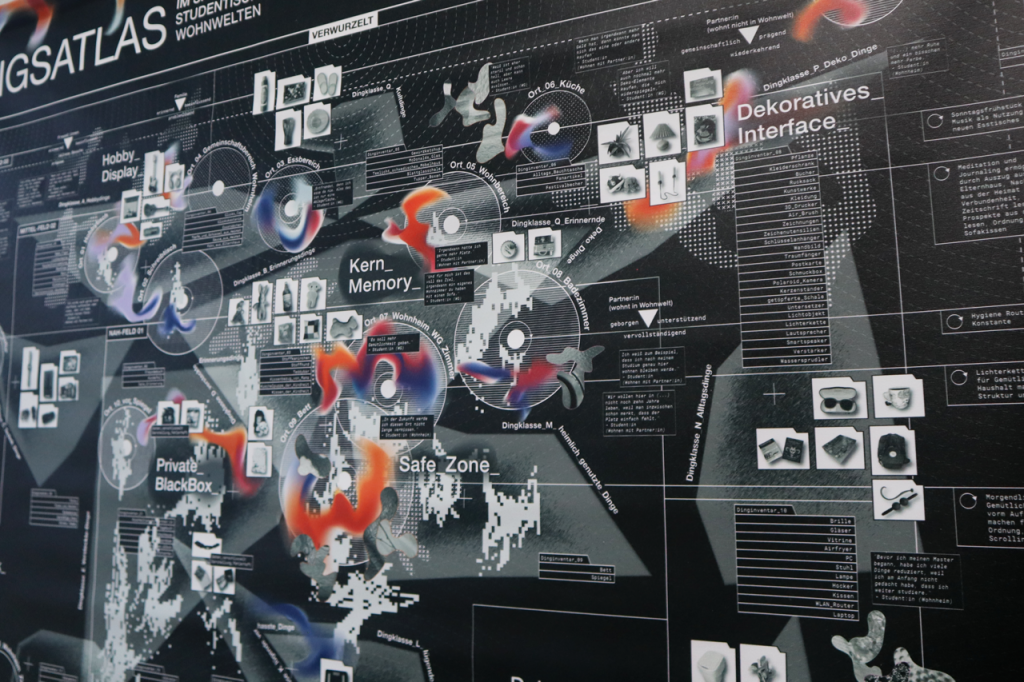
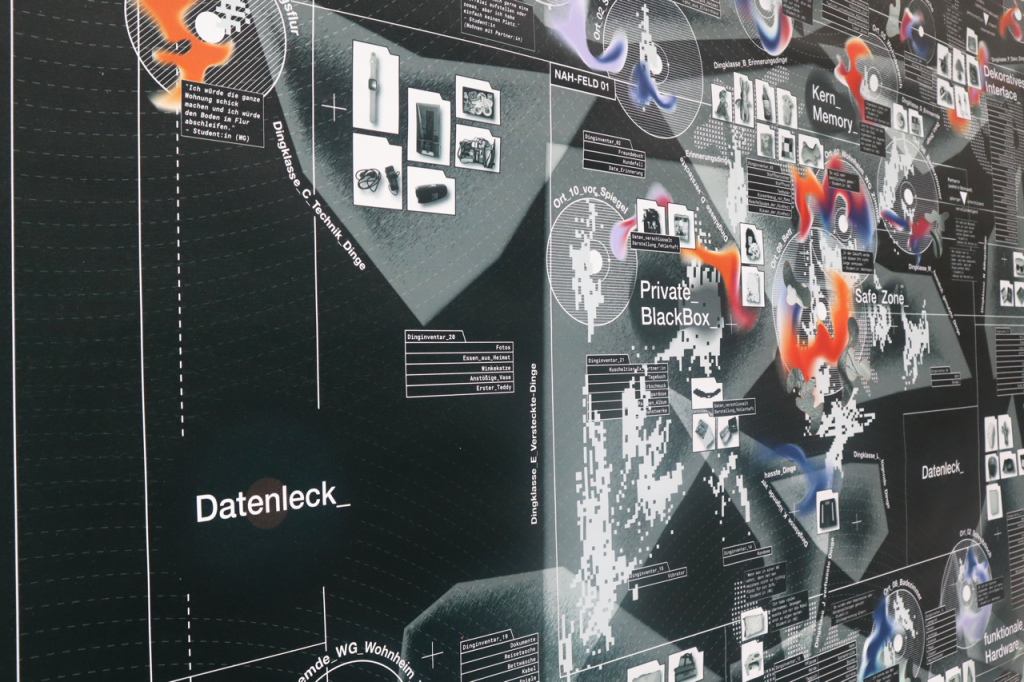
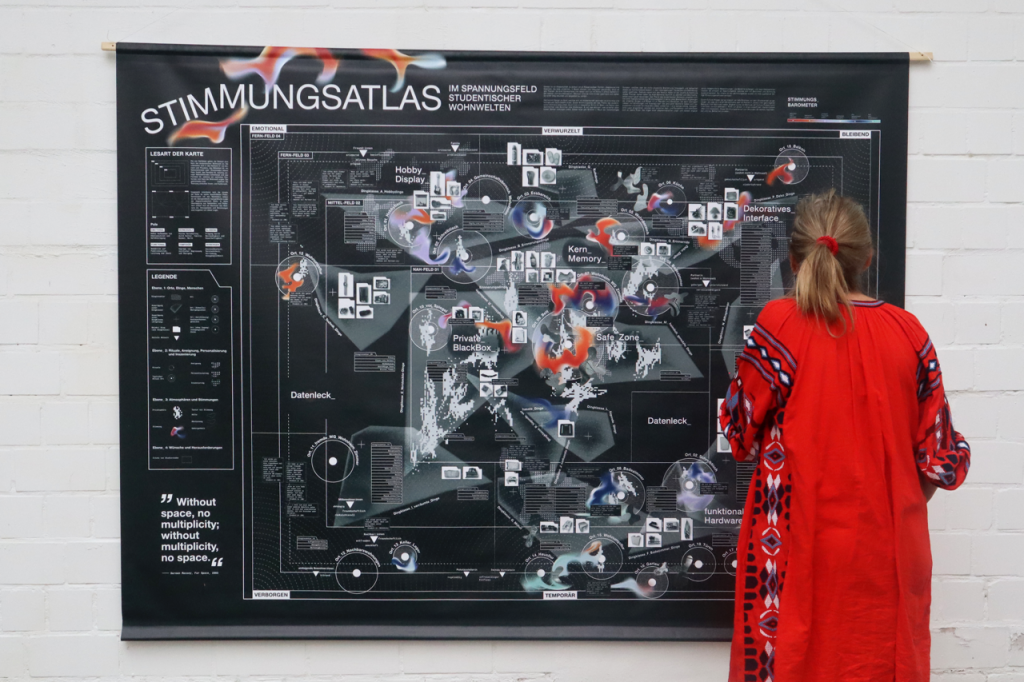
This is where design enters into dialogue with research, forming a contemporary and productive interface. This Mood Atlas investigates the domain of student housing—not in the conventional sense of statistics on dwelling types or reports on rental prices, but rather by addressing what lies between such figures. It renders visible those experiential, affective, and atmospheric dimensions that usually remain hidden beneath quantitative accounts. The atlas approaches space as a layered and multi-dimensional concept that extends beyond physical form, conceiving it instead as a complex system of overlaps, tendencies, and ambiguities.

For this reason, the medium of mapping is particularly suited to the visual articulation of the topic. Maps possess the capacity to spatially situate elements and to register simultaneity through layered structures. Student living is here subjected to a process of operationalization: broken down into its many components—objects and furniture, rooms and people—before being overlaid with moods and intensities. These granular elements are then recomposed to form a new image. They are organized according to an overarching topographic logic, positioned between near and distant zones and oriented around six poles. Following a diagrammatic rationale, they are complemented by metaphorical labels that delineate regions and provoke new associations. What emerges is a field of tensions concerned with temporality and affect.

The material for the Mood Atlas was gathered through qualitative design research methods. Cultural probes enabled deep insights into the everyday lives of ten students—whether living in shared flats or with partners—each maintaining a distinct relationship to their domestic environment. This approach was supplemented by interviews, excerpts of which appear throughout the atlas in the form of quotations.

Maps remain open and interpretive. This Mood Atlas invites exploration, discovery, reflection, and renewed ways of seeing.

Master’s Thesis Project 2025
Supervised by: Prof. Konstantin Haensch, Prof. Franziska Junge
Latest

Isabelle Wydra: „The Male Gaze: Patriarchal Structures in Everyday Life and Design Processes with Reference to Product Design“ (2025)
Consumer Culture & Theory, Design Critique
This master’s thesis investigates how patriarchal structures and gender stereotypes are embedded in everyday products, spatial environments, and professional design processes. Combining feminist theory, sociological concepts such as Doing Gender, and contemporary design research, the project analyzes historical genealogies of gendered form, materiality, and usability while grounding these perspectives in an empirical user survey. The […]
Read More
Januar 24, 2026

admin

Publication: “Essay on ‘Customering’ – Third Spaces of Consumer Culture” (2025)
Consumer Culture & Theory
In “Essay on ‘Customering’ – Third Spaces of Consumer Culture,” Konstantin Haensch reconceptualizes the “customer” not as a passive consumer or mere transaction partner, but as a participant in an evolving social relationship that unfolds between providers and markets. Drawing on sociology, anthropology, marketing theory, and cultural studies, the article traces how customer relations historically […]
Read More
September 24, 2025

admin

Lisa Theil: “Consumer Brands – Emotional Brand Attachment Across Generations and Strategic Future Perspectives for the Food Industry” (2025)
Consumer Culture & Theory
The master’s thesis “Consumer Brands – Emotional Brand Attachment Across Generations and Strategic Future Perspectives for the Food Industry” by Lisa Theil examines how brands in saturated markets build emotional relationships with consumers and why these remain powerful beyond functional product attributes. Starting from a personal consumption experience, the study develops a systematic analysis of […]
Read More
August 26, 2025

admin