Skip to Content

Who Designs our (digital) (next) (uncanny) (interfacing) Lifeworlds?

Praxis↭theory Seminars at the Hildesheim Faculty of Design Examine Current Interface Cultures and their Opaque Spheres of Production

Qualitative Design Research and Critical Design Praxistheory at the Nexus of Culture, Interfaces, and Strategy at the M.A. Gestaltung program Faculty of Design, HAWK University of Applied Sciences and Arts (Hildesheim, Germany)

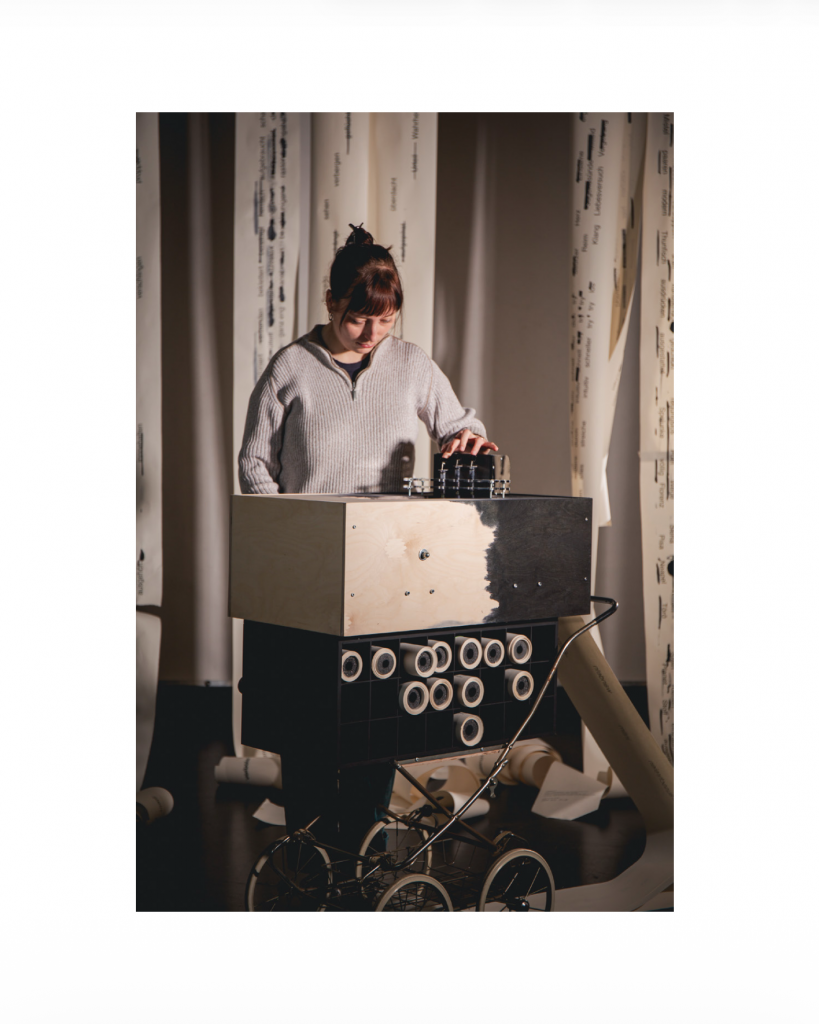
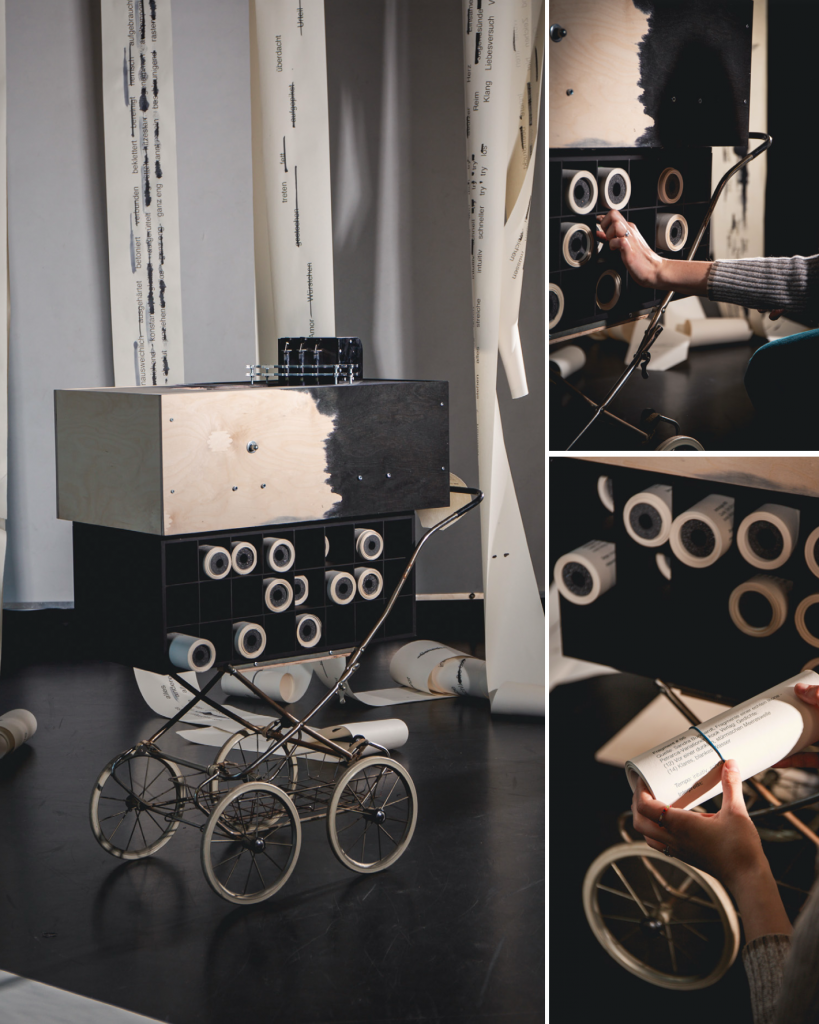
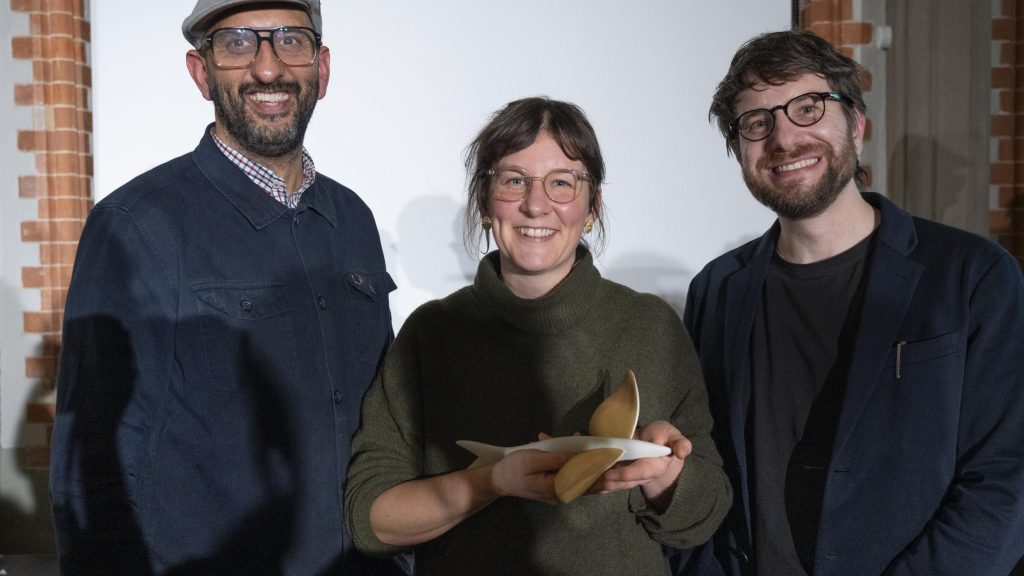
Sandra Holzinger: „VESTIGO – Experimental Keyboard Instrument and Performative Research Platform for the Intuitive Exploration of Spatial Needs“ (2025) [German Design Graduate Award]

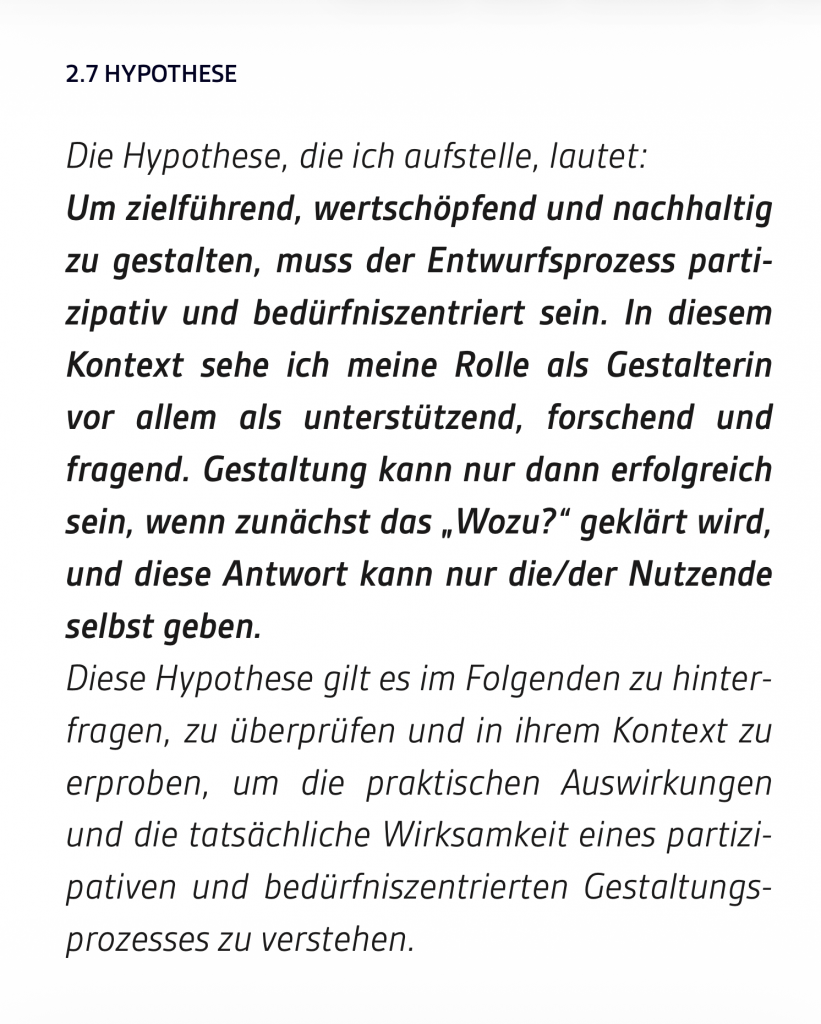
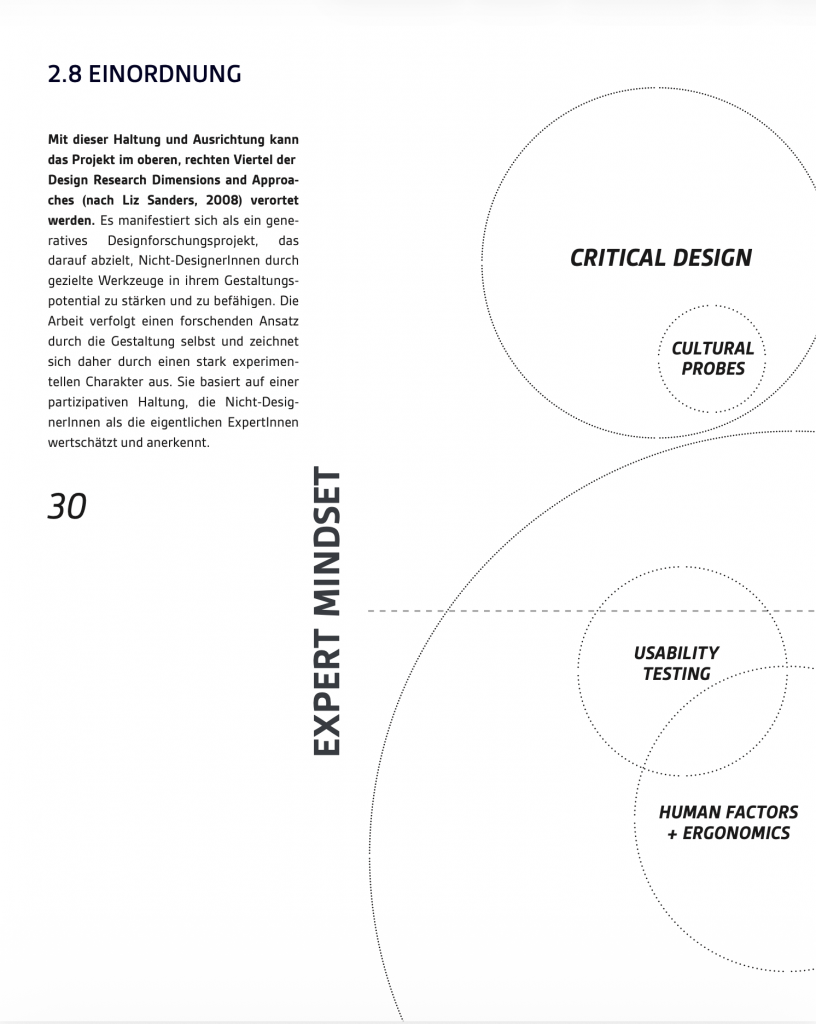
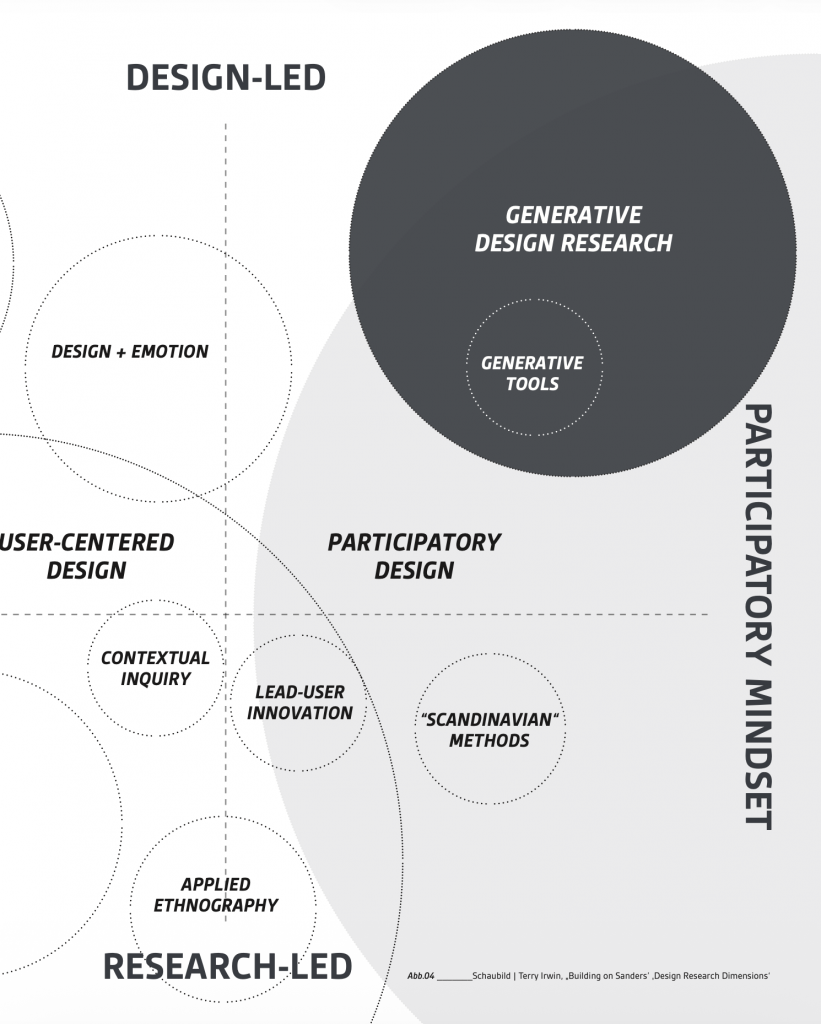
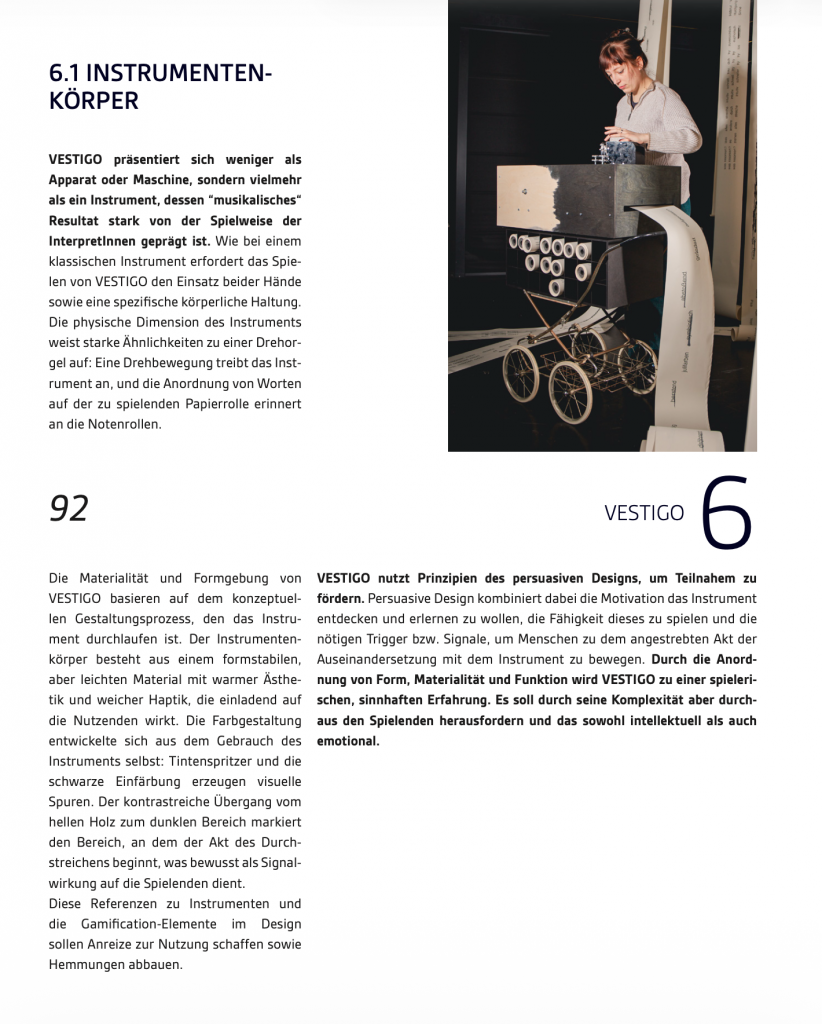
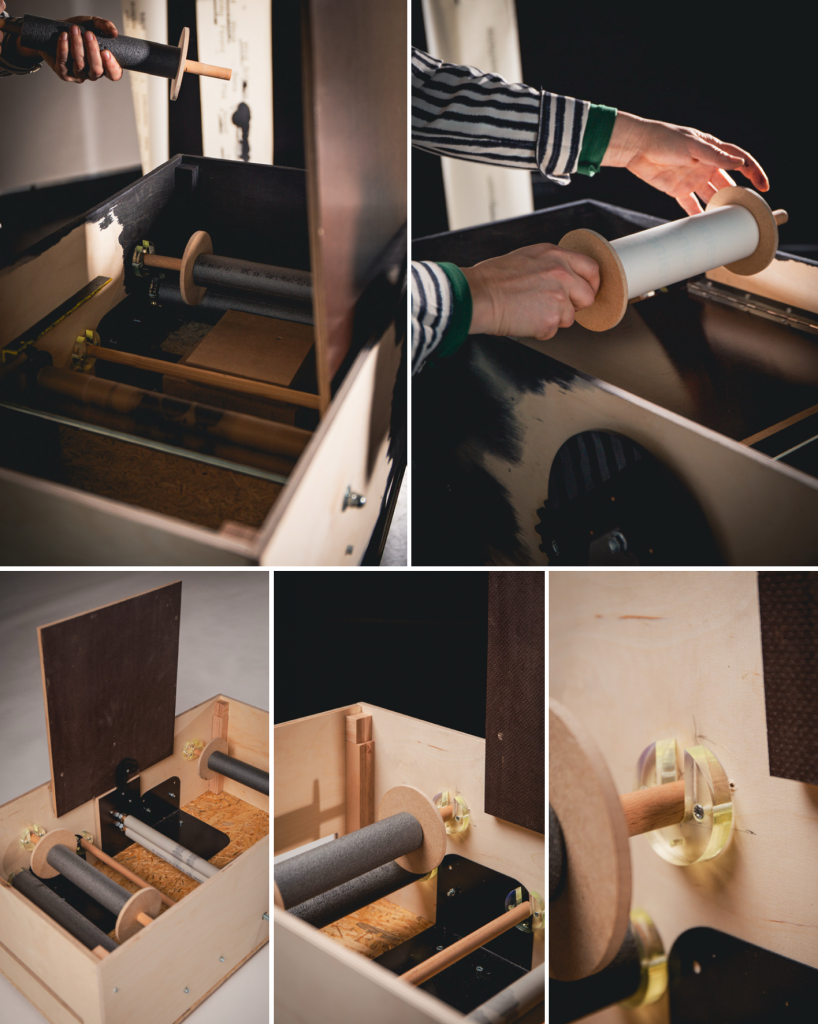
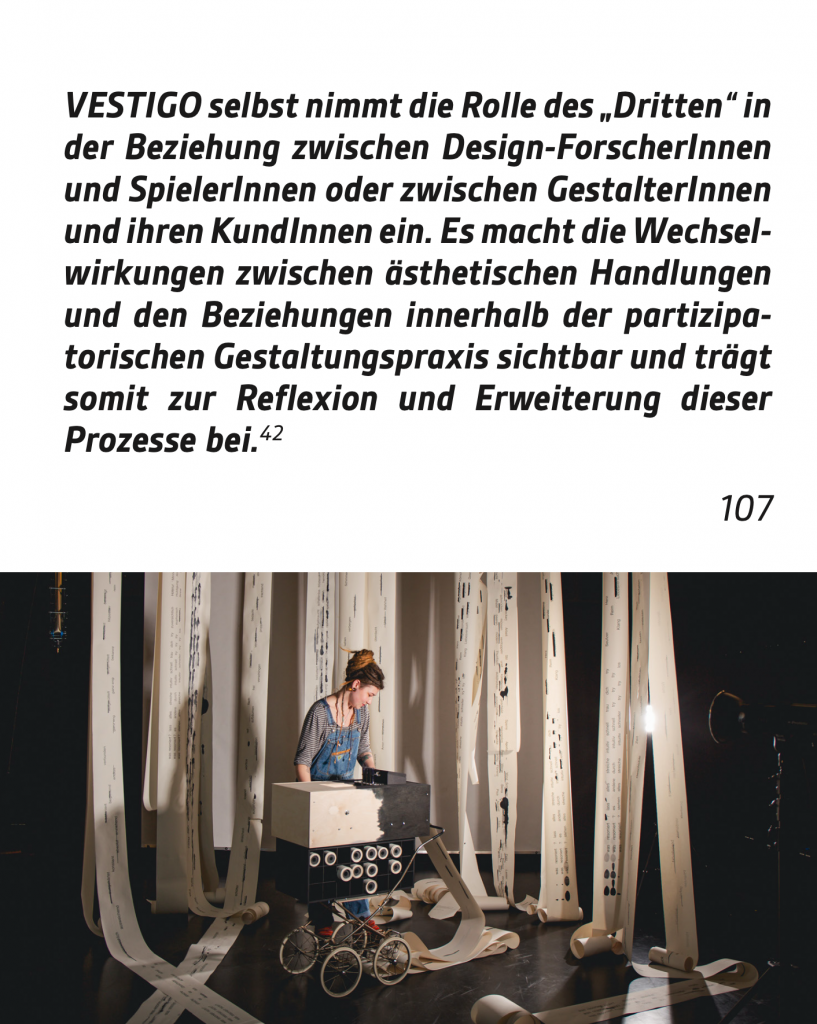
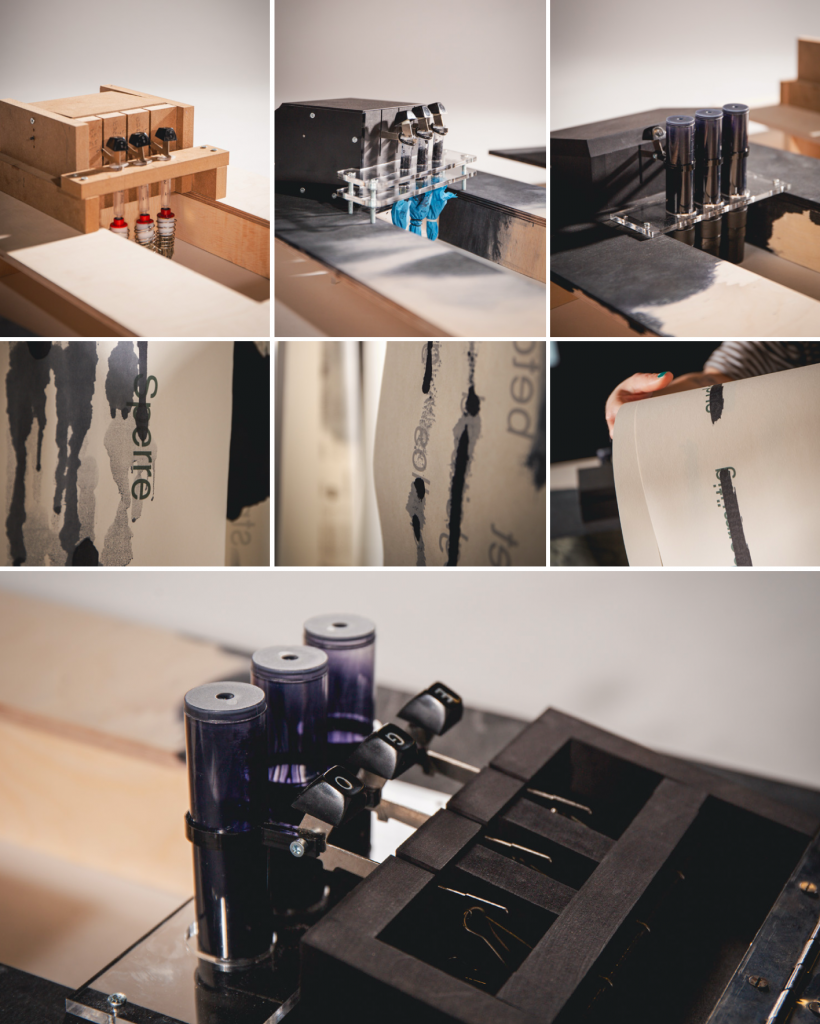
The master’s project VESTIGO develops an experimental research apparatus that positions design itself as the primary epistemic method, combining participatory inquiry, generative tools, and performative exploration. The work explicitly frames its approach as research through design, emphasizing open-ended experimentation, iterative prototyping, and co-creation with participants rather than hypothesis-testing in a conventional scientific sense . Within this framework, non-designers are treated as domain experts whose embodied decisions and interactions with the instrument generate knowledge about spatial needs and latent desires .

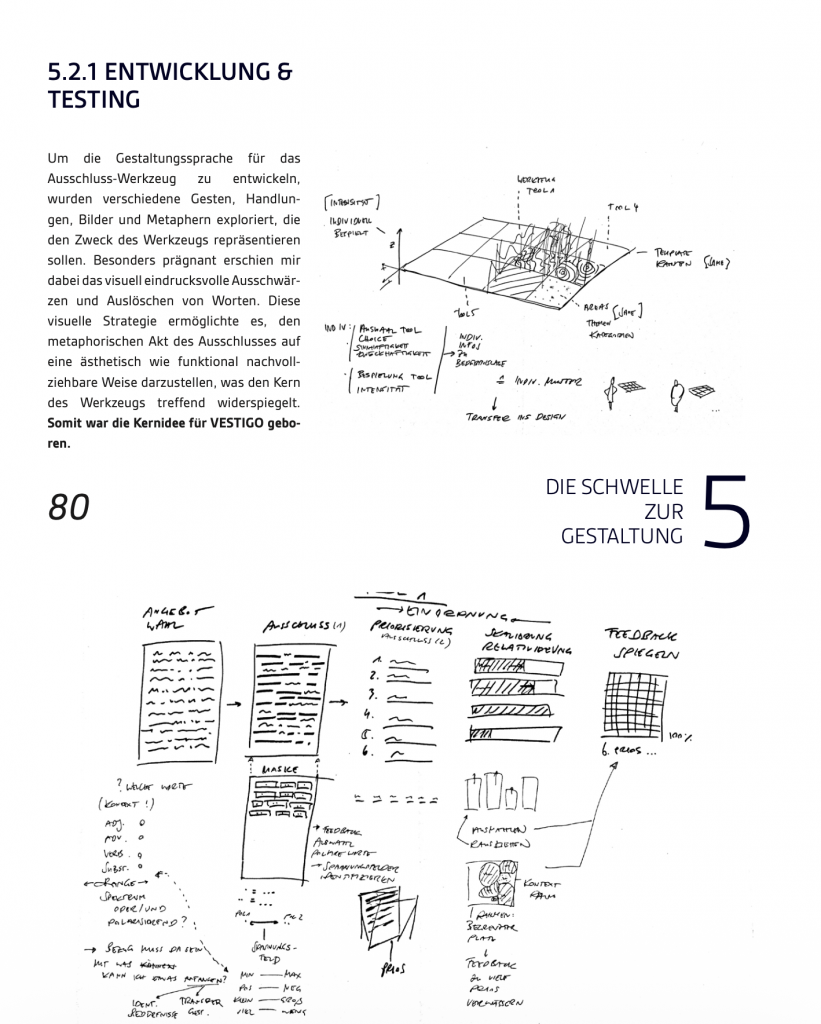
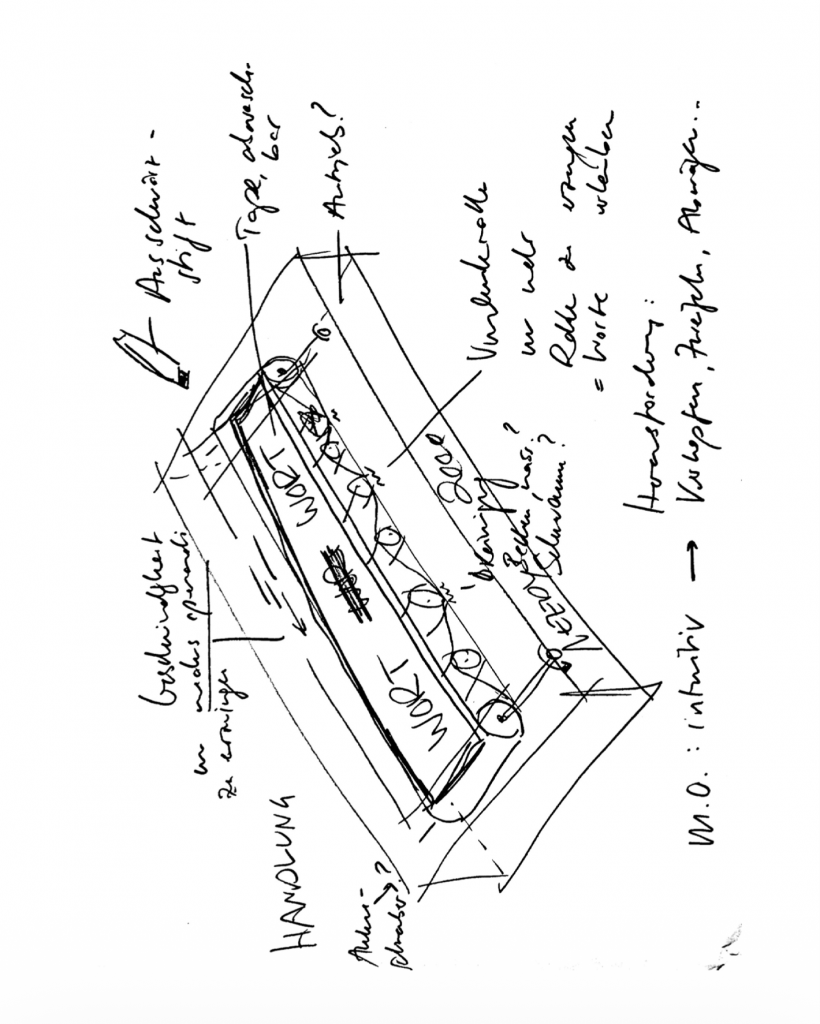
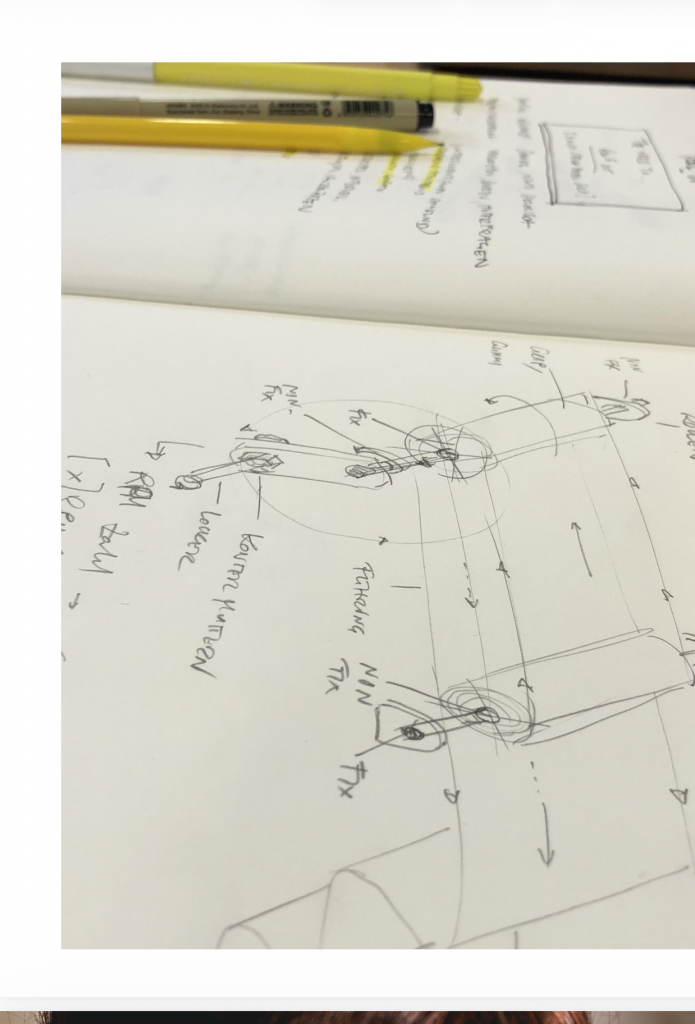
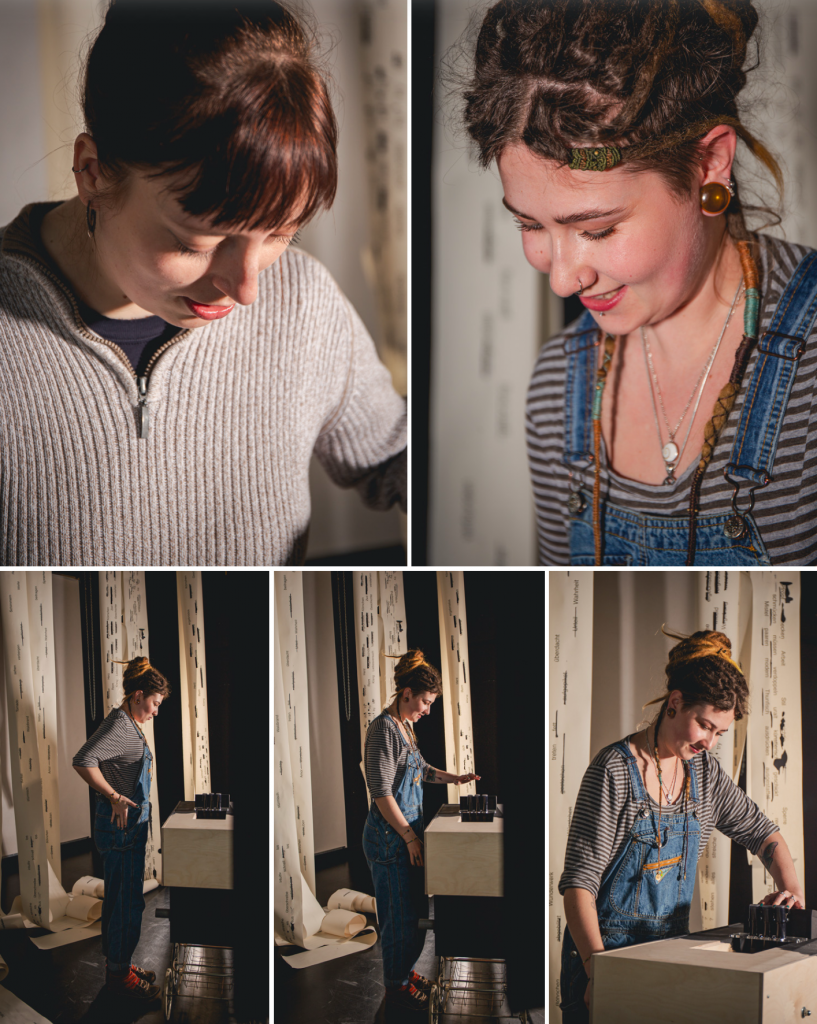
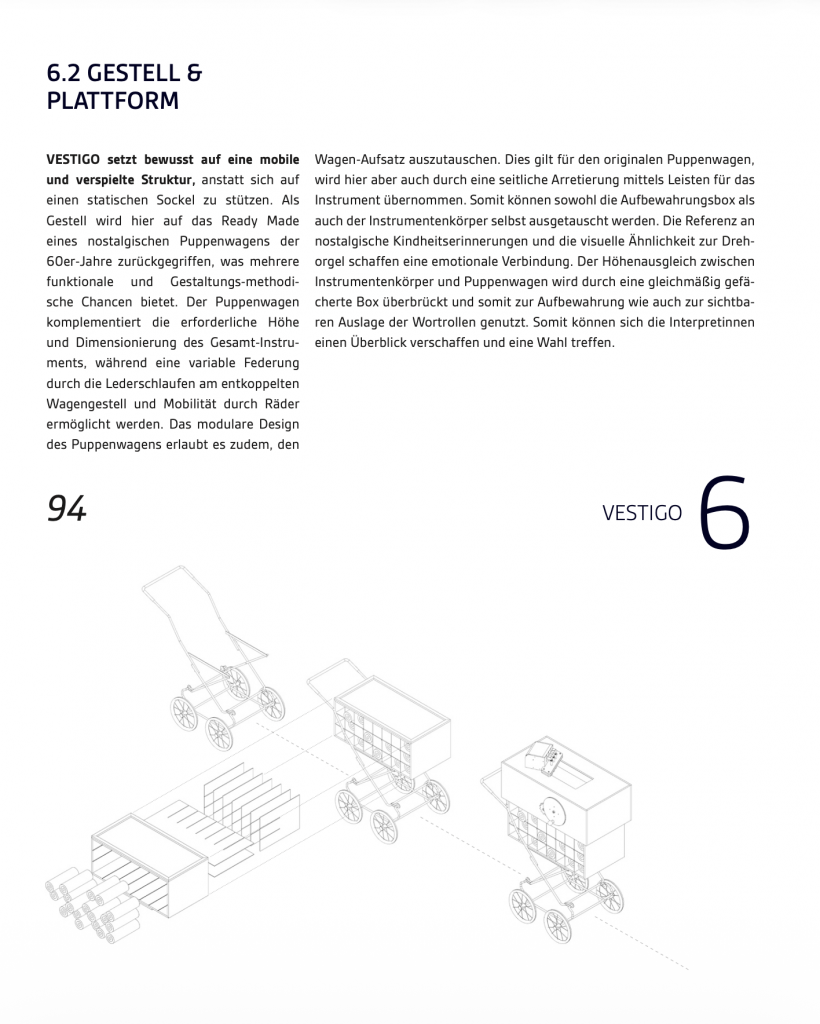
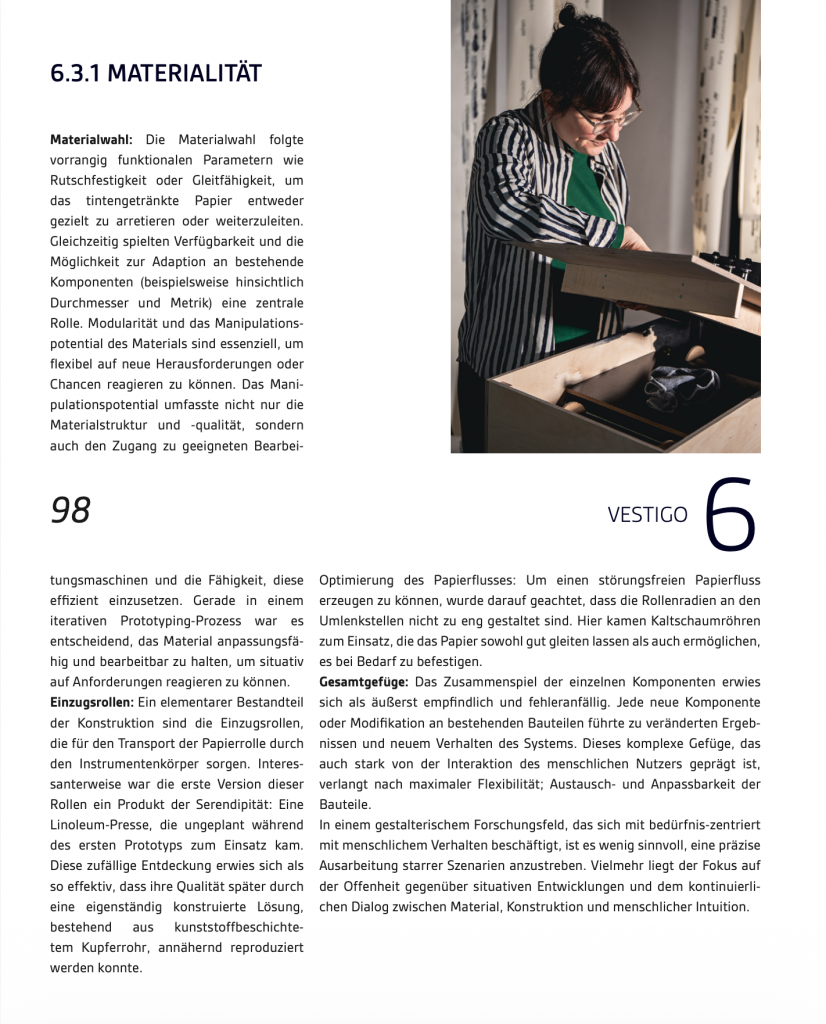
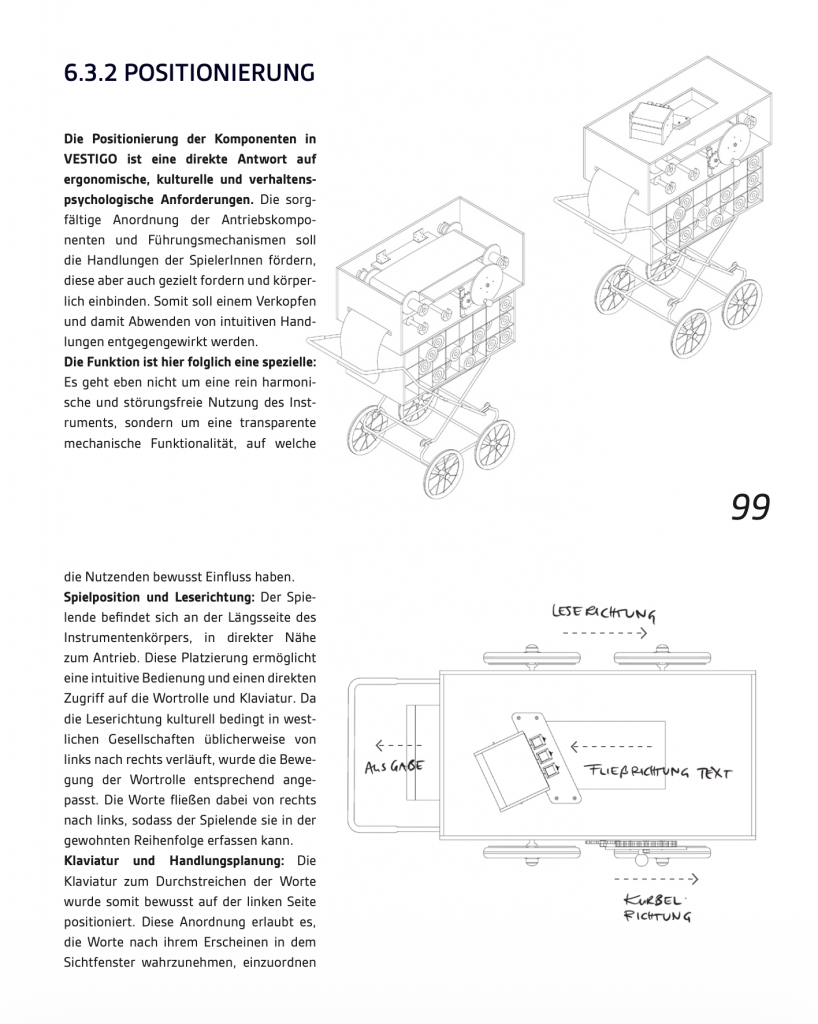
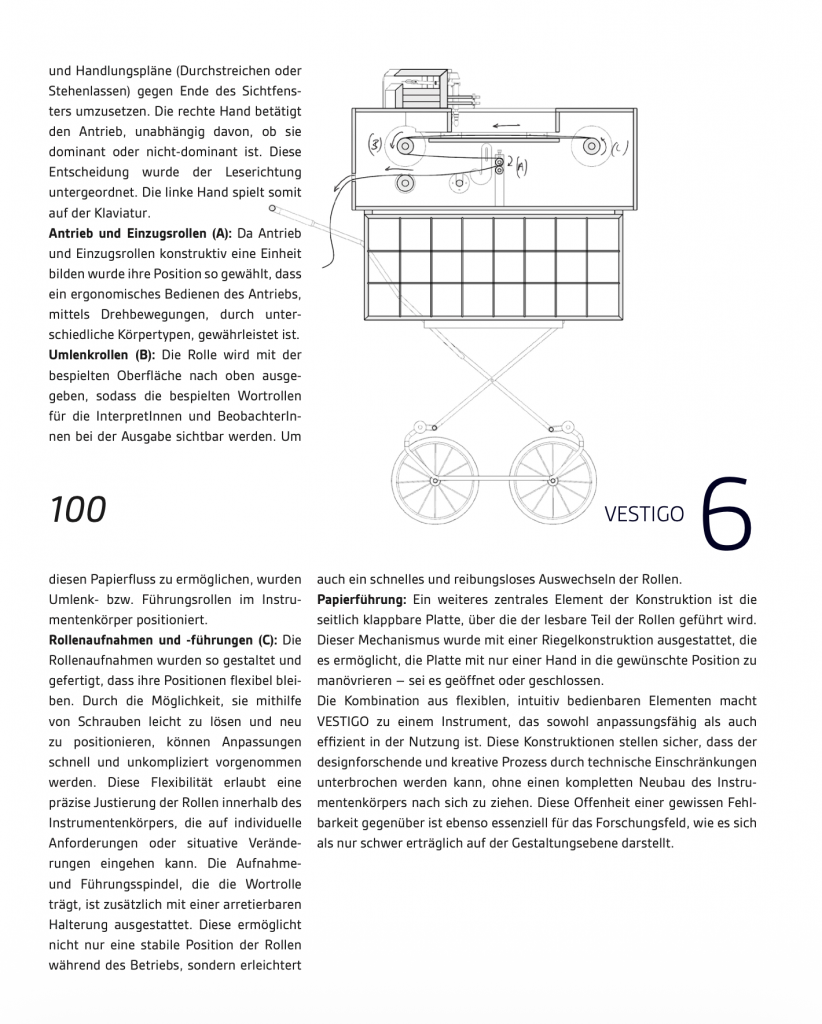
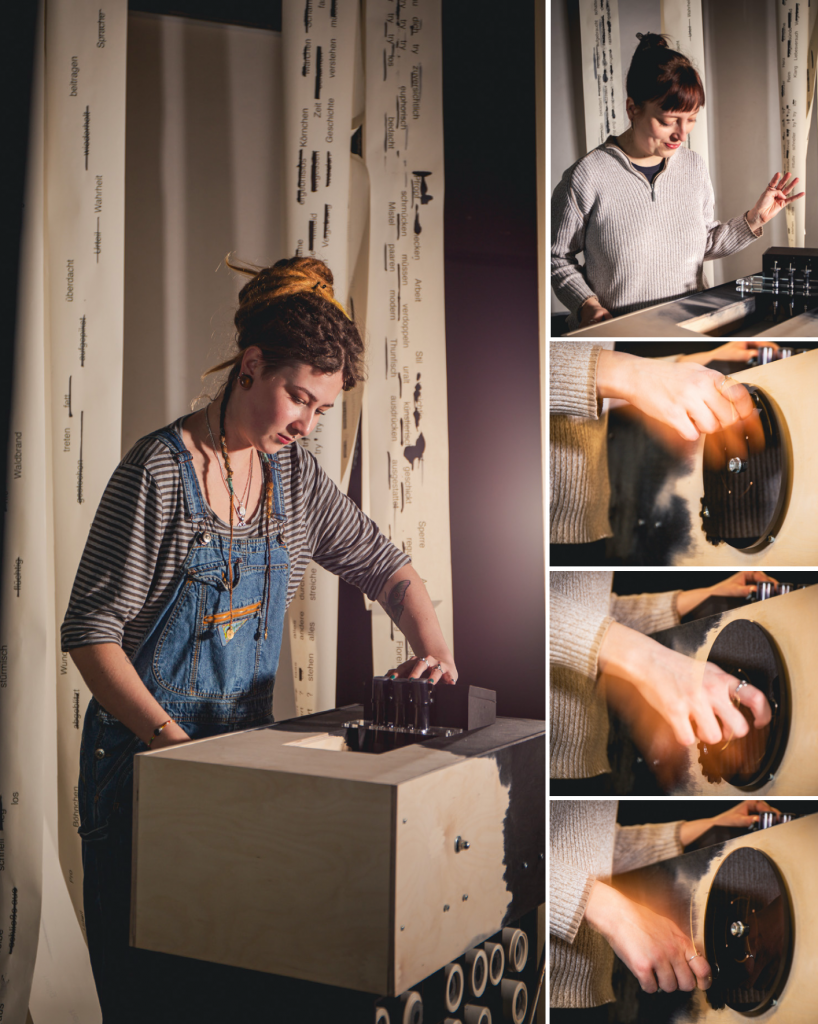
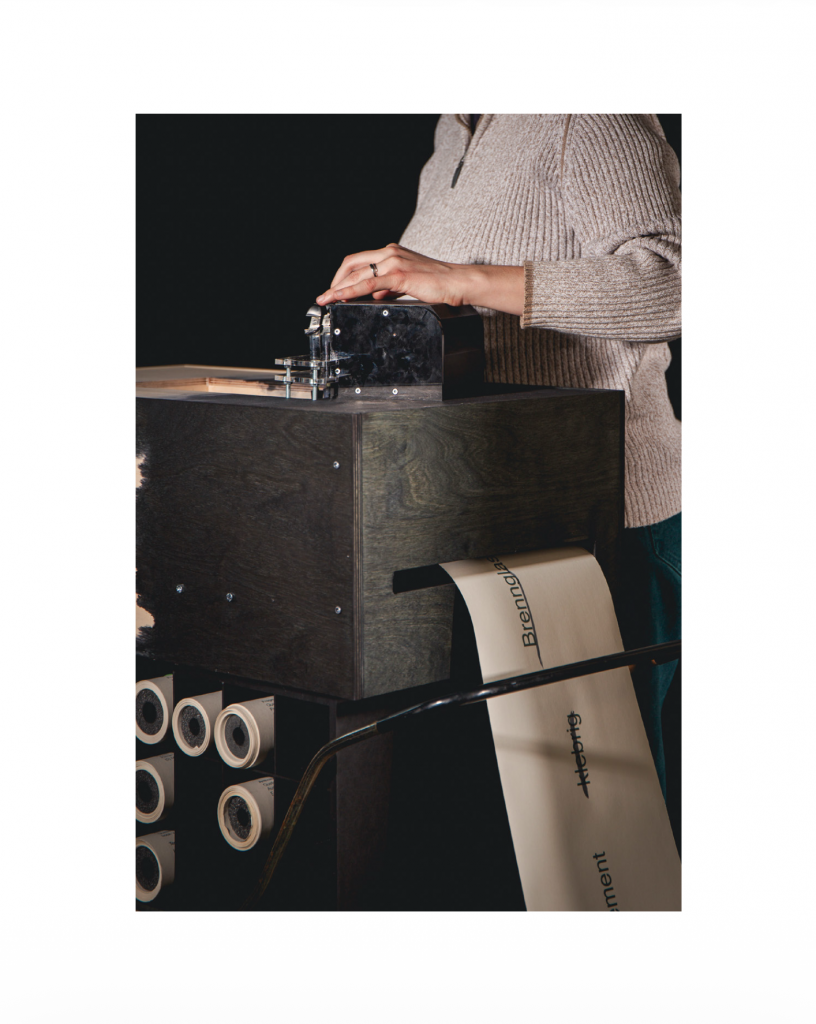
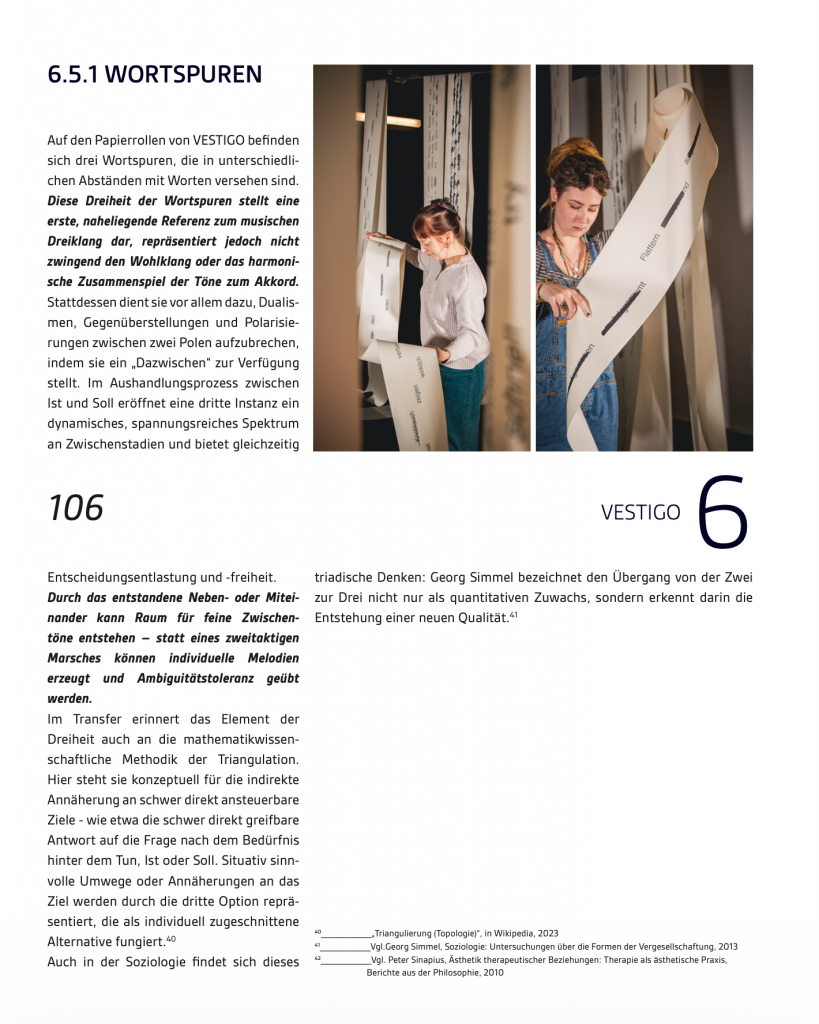
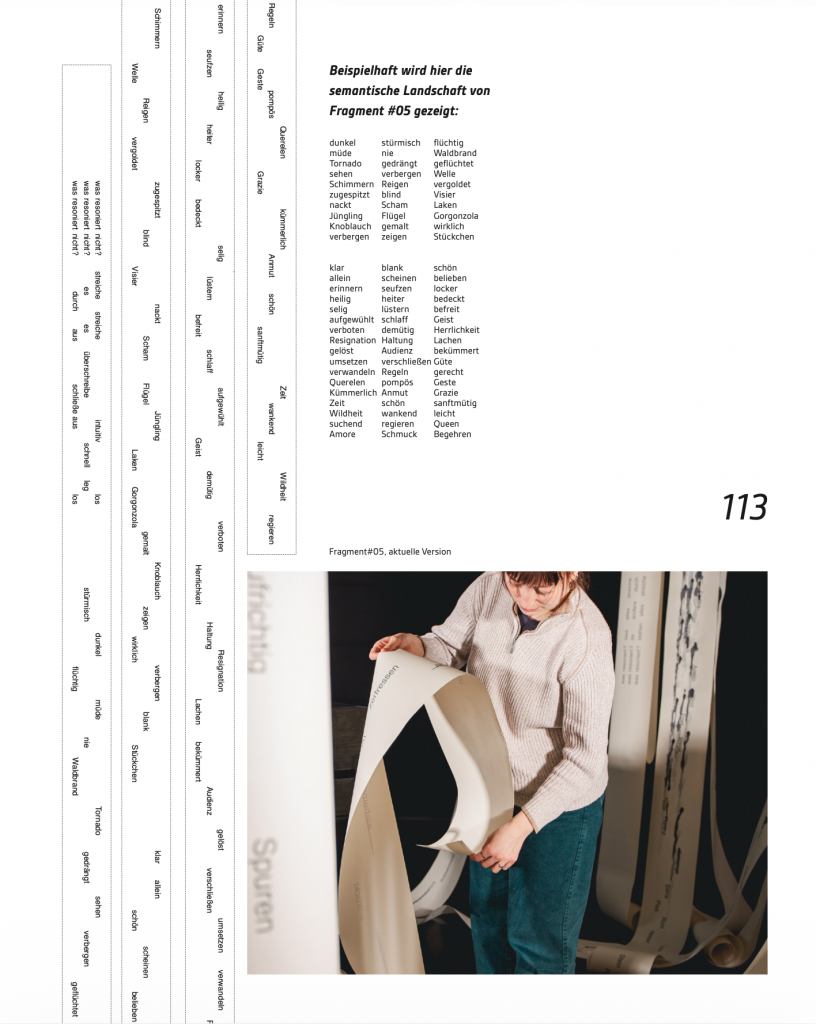
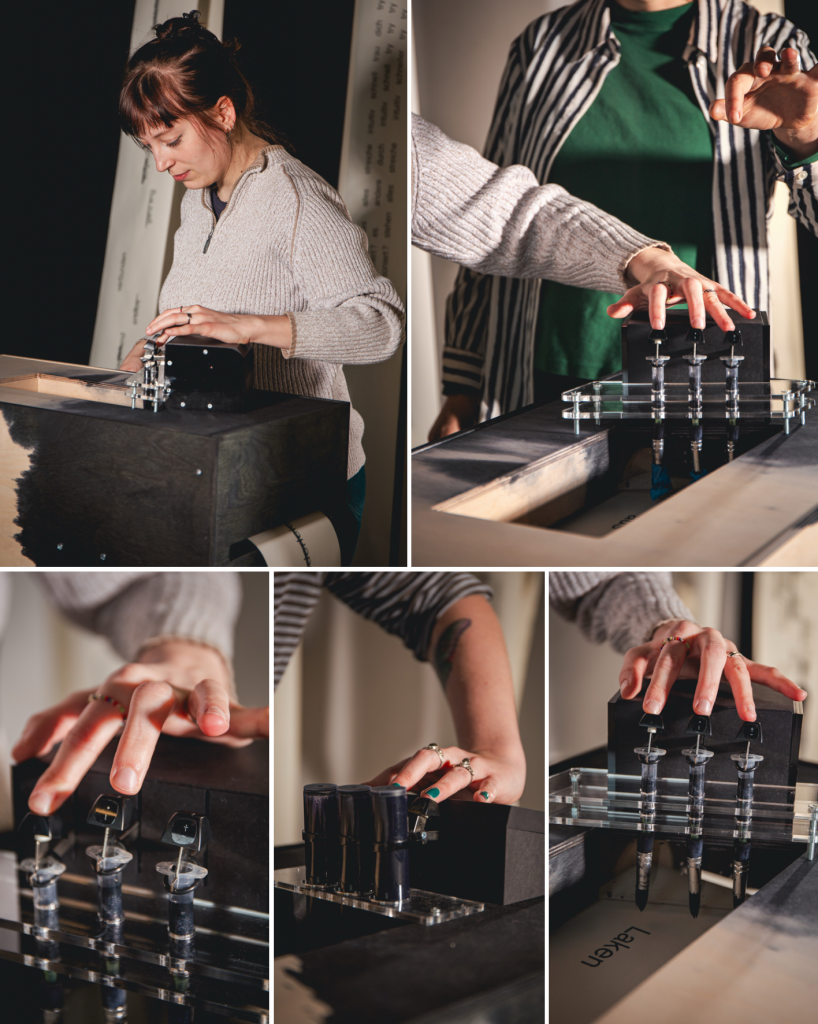
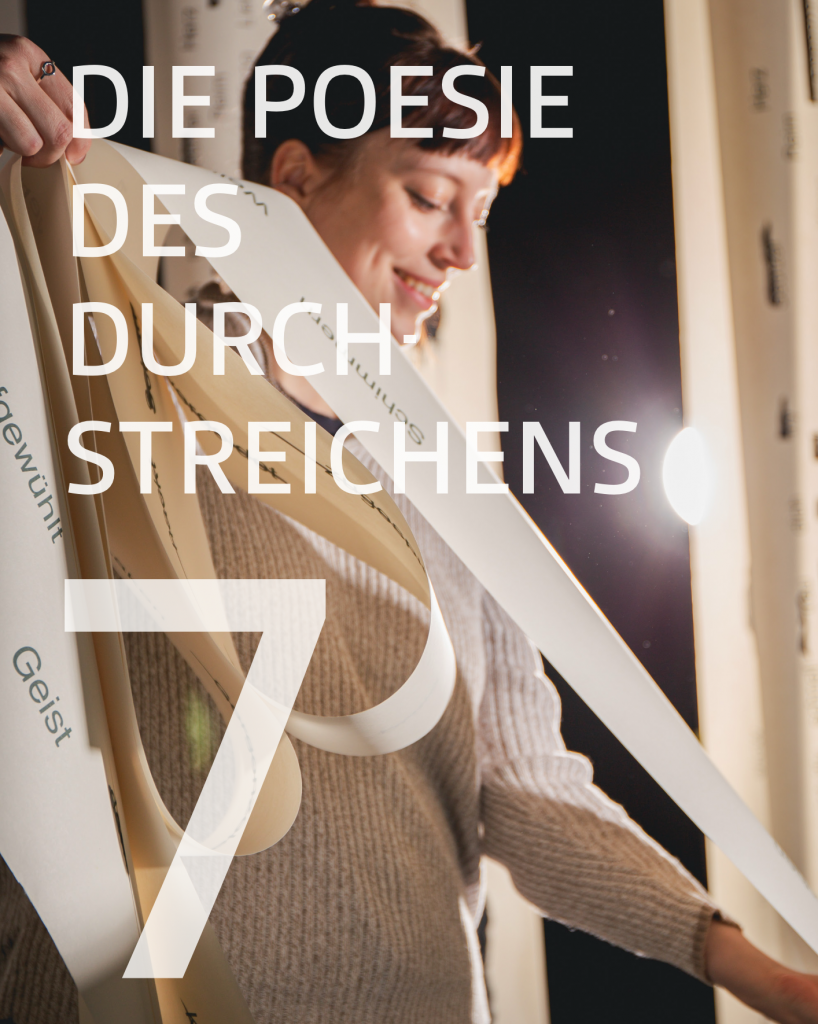
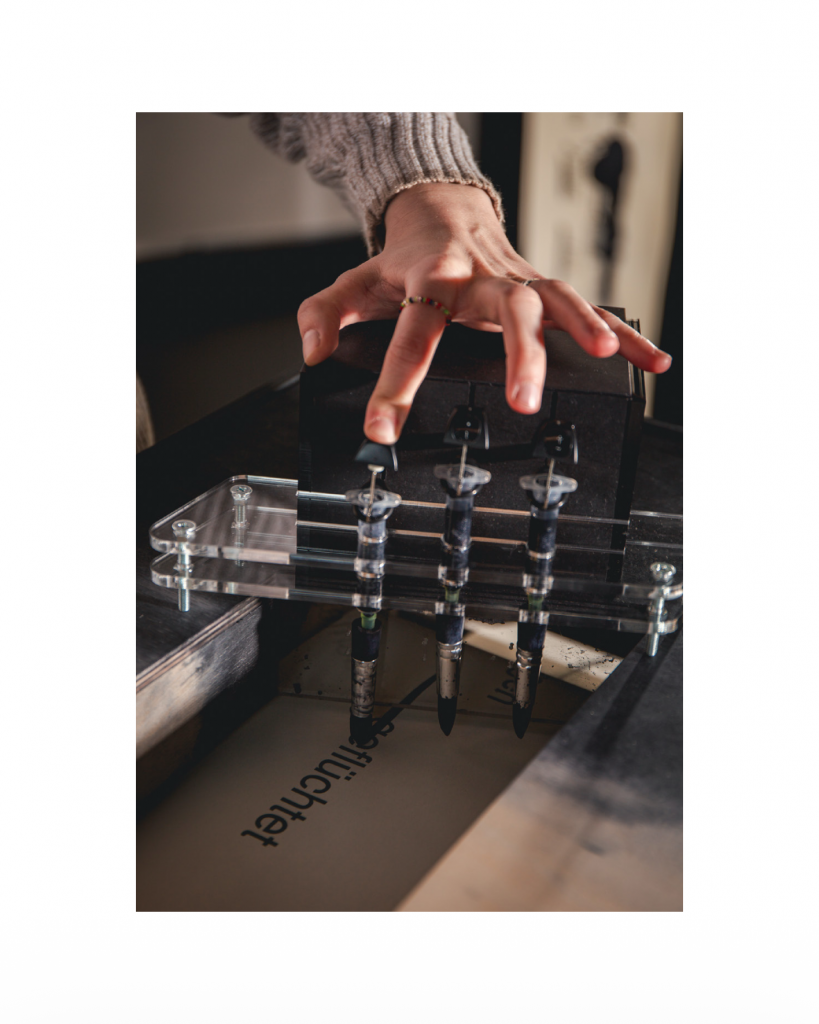
At the core of this methodology is VESTIGO as a performative research platform—a mechanical, tactile “word instrument” that allows participants to strike through, accentuate, or transform poetic language fragments in real time, thereby externalizing inner negotiations between affirmation, doubt, and rejection . This enactment-based procedure shifts inquiry from verbal articulation alone toward material–semiotic inscription, where ink traces, altered paper rolls, and bodily gestures become data that document meaning-making processes between language and space . The project explicitly foregrounds intuition, contingency, and the unforeseeable as methodological resources, aligning the design process with performative research logics that privilege emergence over control .

Award 2025

German Design Graduates
GDG Award Website
Award 2025

Price of the Faculty
HAWK Price of Faculty
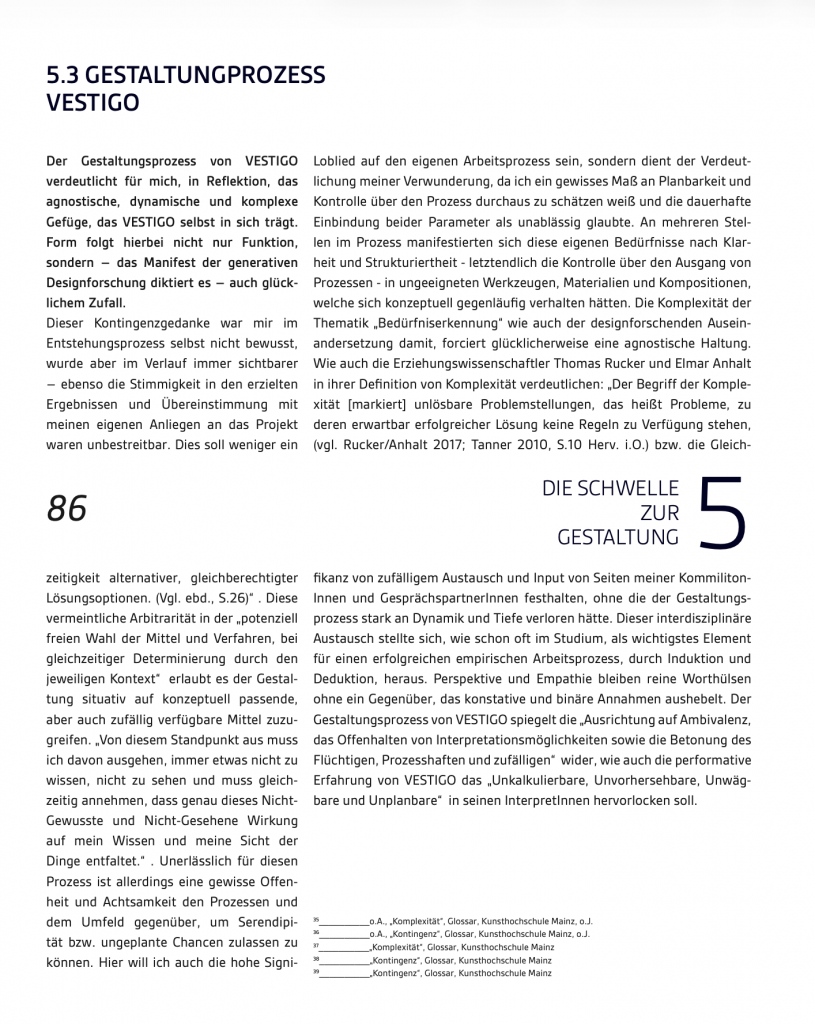
Methodologically, the project integrates qualitative design ethnography—including story-listening interviews, expert conversations, and field encounters in the Tiny Living context—with secondary research across architecture, philosophy, psychology, and consultancy disciplines . These insights feed into generative design research cycles in which the artifact is repeatedly redesigned and tested, allowing the tool itself to evolve as both object and method . The continual oscillation between theoretical reflection and hands-on making is presented as a defining epistemic engine of the project, positioning knowledge as something produced through action, failure, and revision rather than detached observation .

Overall, VESTIGO exemplifies an innovative hybrid methodology that fuses research through design, material culture studies, semiotic inscription, and performative experimentation. By turning embodied interaction, linguistic traces, and crafted artifacts into analytical instruments, the project proposes a mode of spatial research in which needs are not merely surveyed but staged, enacted, and materially negotiated within the design process itself .
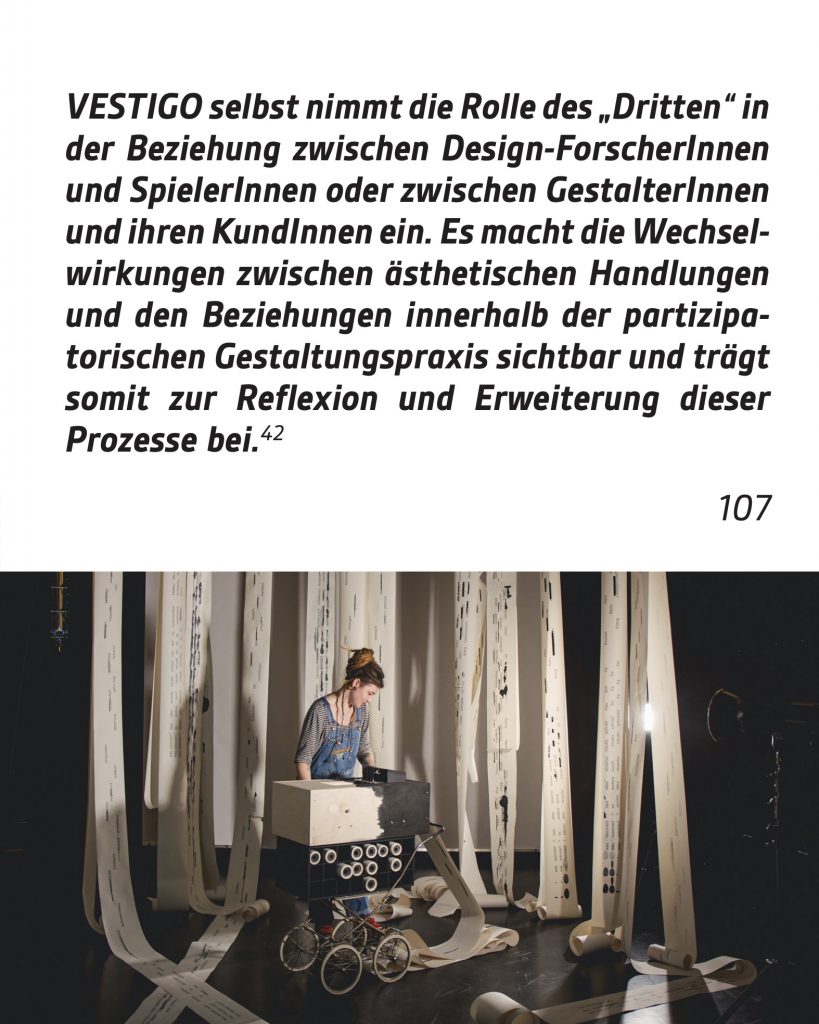
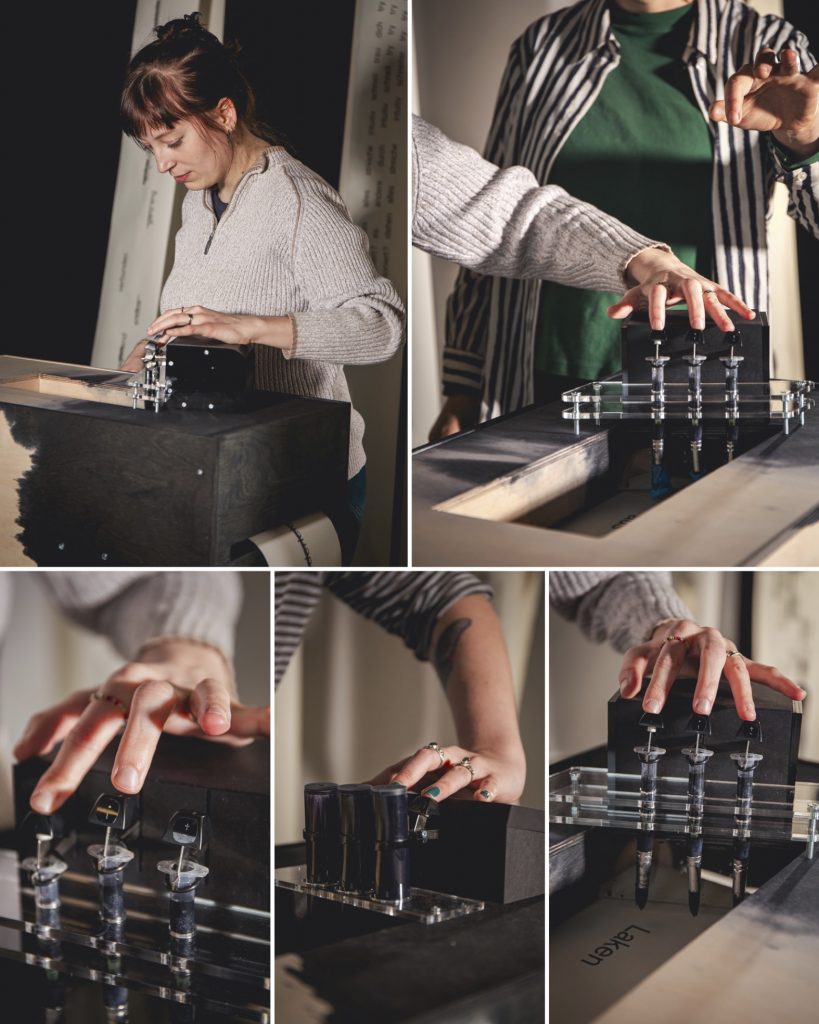
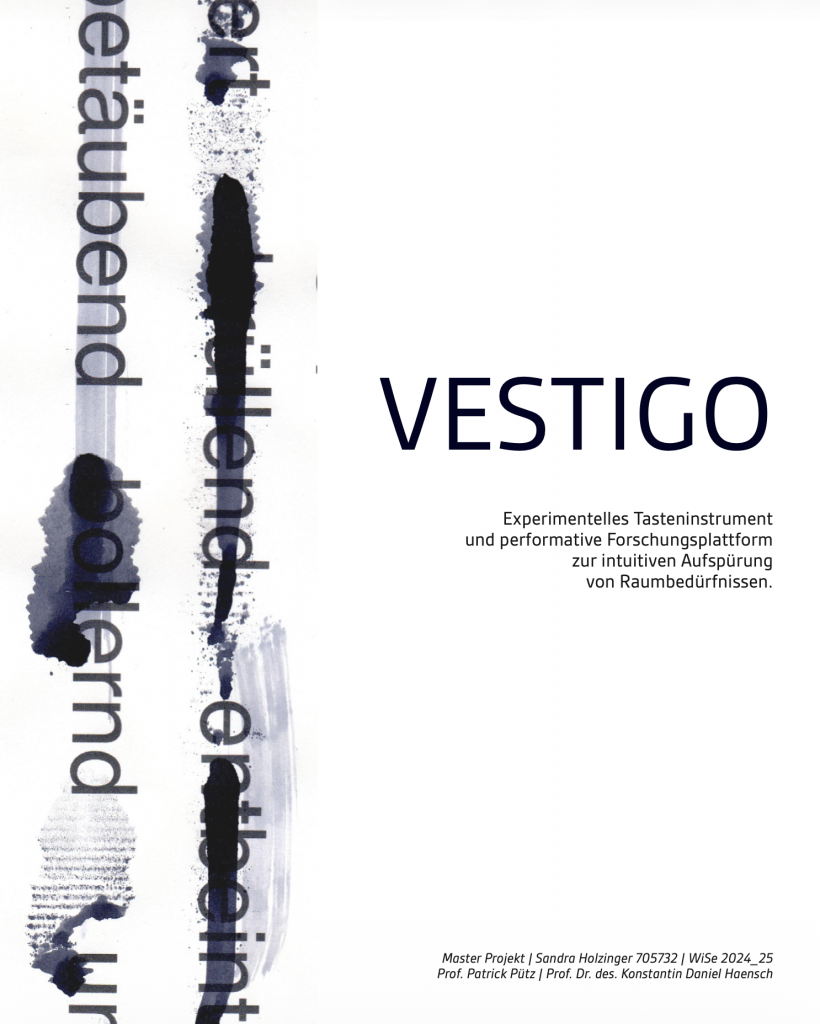
Sandra Holzinger: VESTIGO Experimentelles Tasteninstrument und performative Forschungsplattform zur intuitiven Aufspürung von Raumbedürfnissen

Master’s Thesis Project 2025
Supervised by: Prof. Konstantin Haensch, Prof. Patrick Pütz
Latest

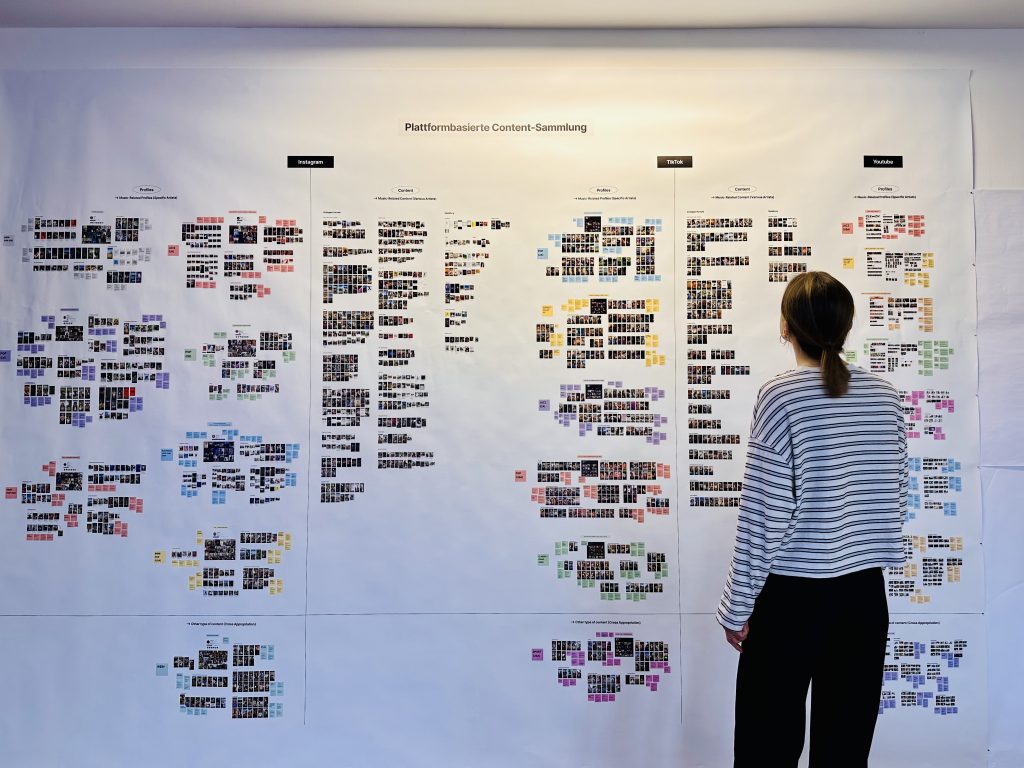
Lea Sofia Fichtner: „Content Strategies for Jazz on TikTok – Design Research on the Visibility of Artistic Practice in Jazz“ (2026)
[Research through Design], Communications, Design Strategy, Entrepreneurship, Innovation, Interface Cultures, Marketing, Music, Narration, Post-Branding
This master’s thesis investigates how content strategies on TikTok can contribute to the visibility of artistic practice in jazz. Situating TikTok within the broader digital transformation of music cultures, the study examines how platform logics, algorithmic structures, and short-form video aesthetics reshape the conditions under which jazz musicians can present their work. Rather than focusing […]
Read More
Februar 22, 2026

admin

Ina Szczepanski: „Concepts Trouvés: Design in an Intercultural Context – Making Research Through Design Tangible and Visible“ (2026)
[Cartography], [Design Critique], [Design Ethnography], [Research through Design], Consumer Culture, Interface Cultures, Marketing, Post-Branding, Urban Studies
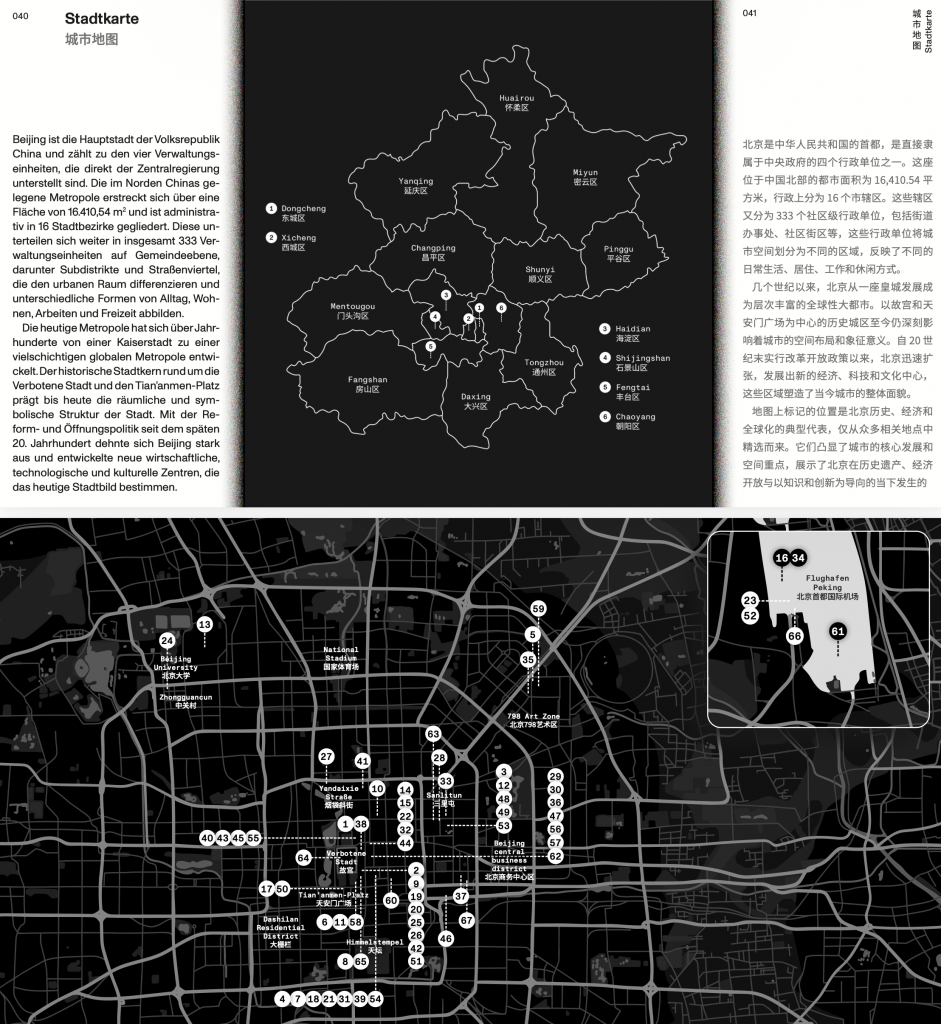
This master’s thesis investigates how design can function as a research practice that makes knowledge in intercultural contexts visible and experientially accessible. Based on the project Concepts Trouvés, which examined English-language terms found in Beijing’s urban commercial landscape, the work reflects on how design ethnography and Research through Design can explicate implicit knowledge embedded in […]
Read More
Februar 22, 2026

admin

Isabelle Wydra: „The Male Gaze: Patriarchal Structures in Everyday Life and Design Processes with Reference to Product Design“ (2025)
[Cartography], [Design Critique], Consumer Culture, Gender/Queer, Post-Branding
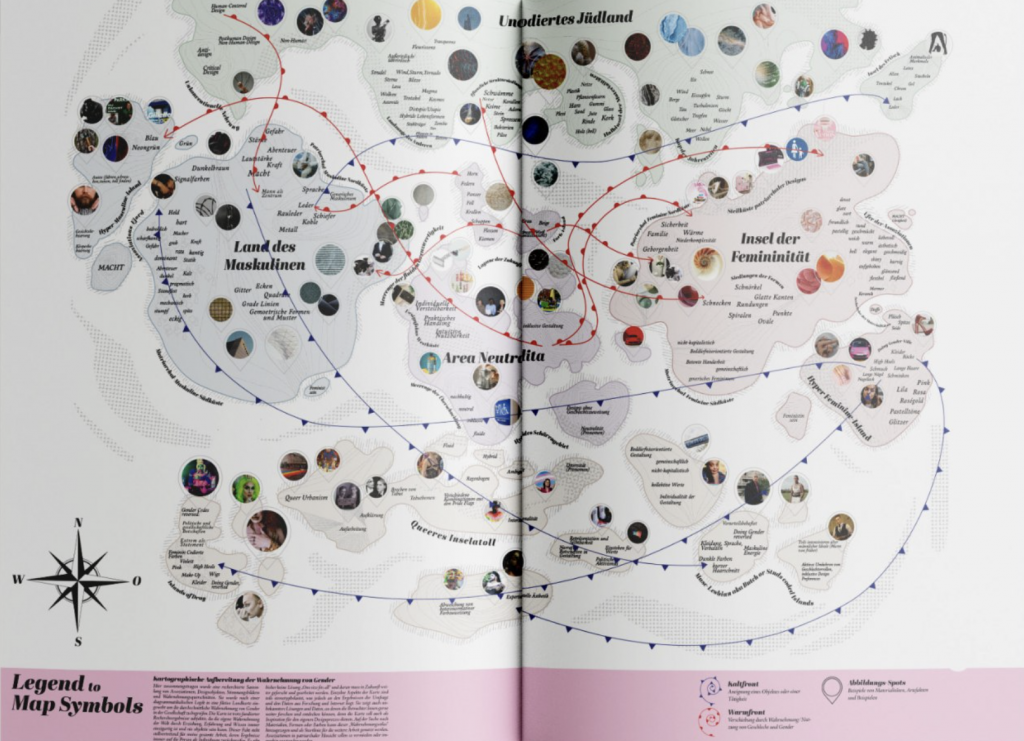
This master’s thesis investigates how patriarchal structures and gender stereotypes are embedded in everyday products, spatial environments, and professional design processes. Combining feminist theory, sociological concepts such as Doing Gender, and contemporary design research, the project analyzes historical genealogies of gendered form, materiality, and usability while grounding these perspectives in an empirical user survey. The […]
Read More
Januar 24, 2026

admin