Who Designs our
(digital)(next)(uncanny)(interfacing)
Lifeworlds?
Praxis↭theory Seminars at the Hildesheim Faculty of Design Examine Current Interface Cultures and their Opaque Spheres of Production
Qualitative Design Research and Critical Design Praxistheory at the Nexus of Culture, Interfaces, and Strategy at the M.A. Gestaltung program Faculty of Design, HAWK University of Applied Sciences and Arts (Hildesheim, Germany)
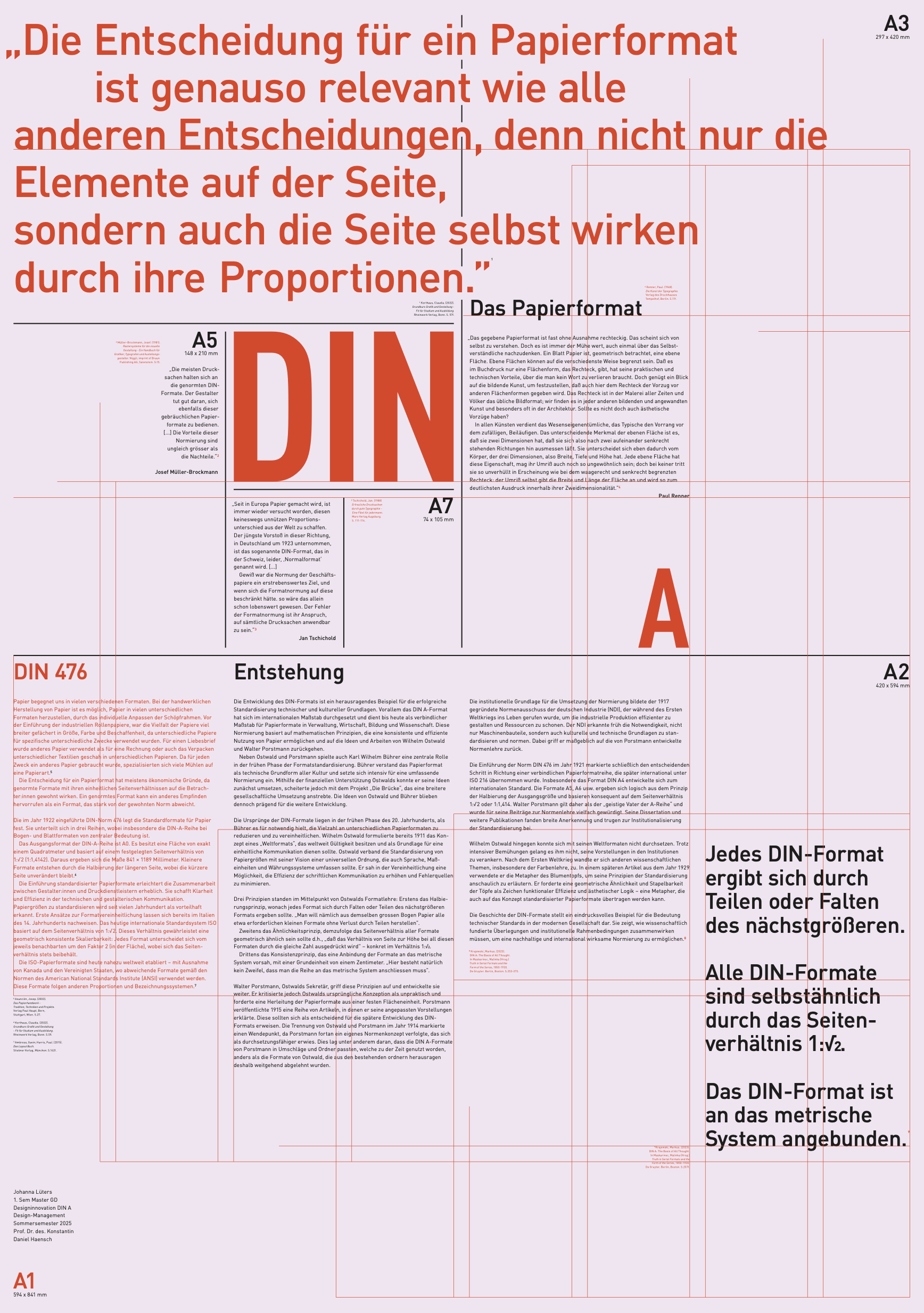
The poster traces the cultural, mathematical, and institutional history of the DIN paper formats, focusing on how the DIN-A series became a global standard. It explains the key principles behind the system—halving, geometric similarity (1:√2), and metric consistency—and highlights the roles of Wilhelm Ostwald, Walter Porstmann, and Karl Wilhelm Bührer in early twentieth-century debates on standardization. By situating DIN formats within design practice, printing technologies, and international norms (ISO), the poster argues that paper sizes are not merely technical conventions but powerful infrastructural decisions shaping efficiency, aesthetics, and everyday graphic work.
Johanna Lüters: DIN
Seminar work 2024 supervised by: Prof. Konstantin Haensch
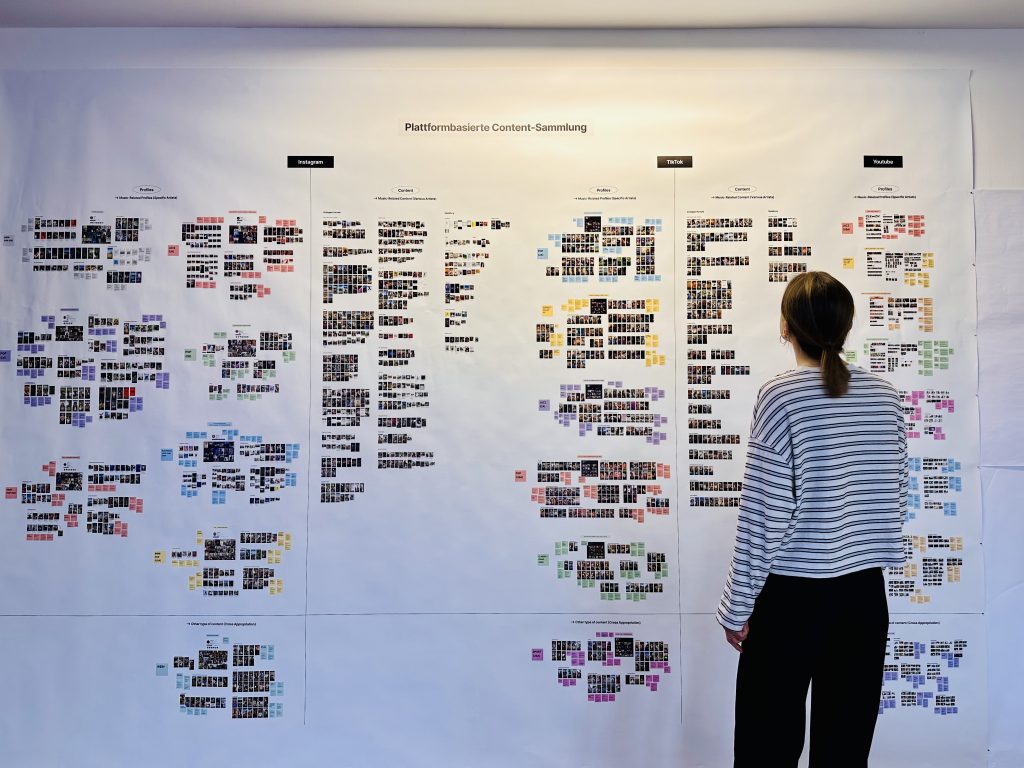
This master’s thesis investigates how content strategies on TikTok can contribute to the visibility of artistic practice in jazz. Situating TikTok within the broader digital transformation of music cultures, the study examines how platform logics, algorithmic structures, and short-form video aesthetics reshape the conditions under which jazz musicians can present their work. Rather than focusing […]
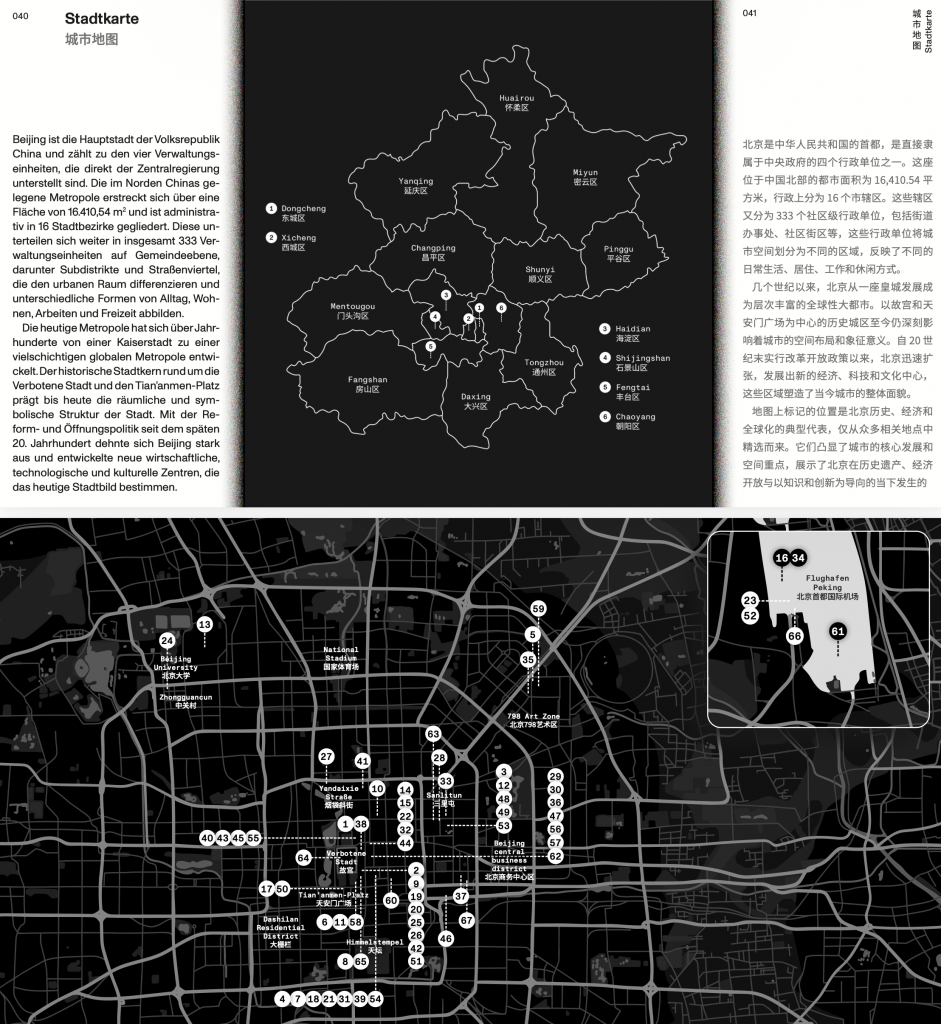
This master’s thesis investigates how design can function as a research practice that makes knowledge in intercultural contexts visible and experientially accessible. Based on the project Concepts Trouvés, which examined English-language terms found in Beijing’s urban commercial landscape, the work reflects on how design ethnography and Research through Design can explicate implicit knowledge embedded in […]
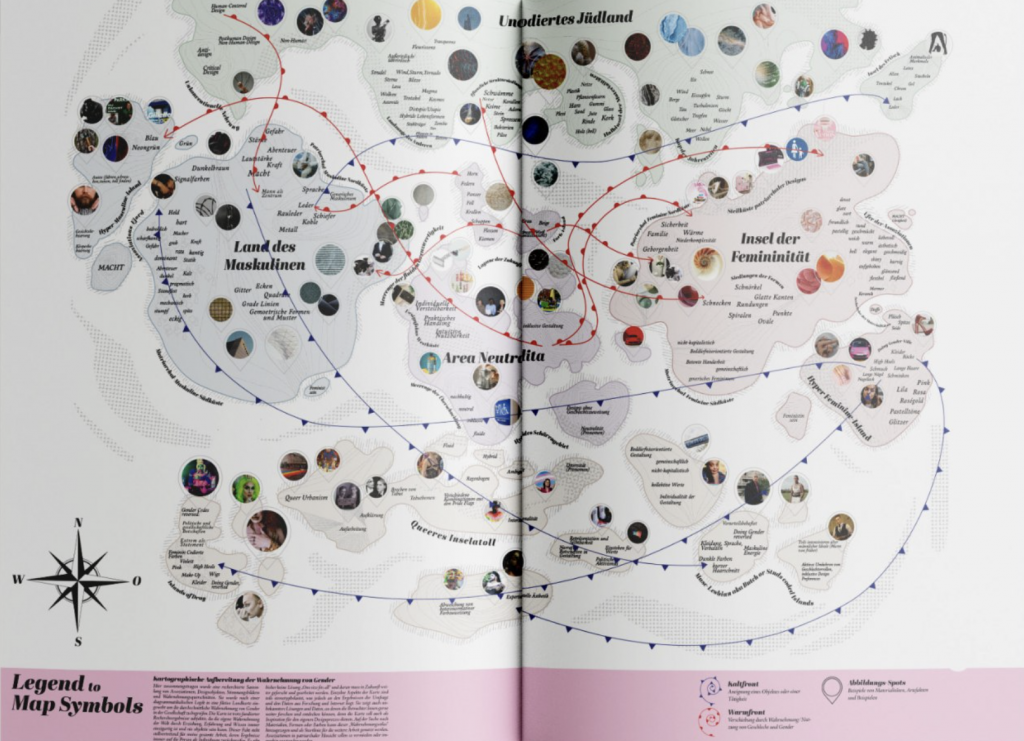
This master’s thesis investigates how patriarchal structures and gender stereotypes are embedded in everyday products, spatial environments, and professional design processes. Combining feminist theory, sociological concepts such as Doing Gender, and contemporary design research, the project analyzes historical genealogies of gendered form, materiality, and usability while grounding these perspectives in an empirical user survey. The […]