Who Designs our
(digital)(next)(uncanny)(interfacing)
Lifeworlds?
Praxis↭theory Seminars at the Hildesheim Faculty of Design Examine Current Interface Cultures and their Opaque Spheres of Production
Qualitative Design Research and Critical Design Praxistheory at the Nexus of Culture, Interfaces, and Strategy at the M.A. Gestaltung program Faculty of Design, HAWK University of Applied Sciences and Arts (Hildesheim, Germany)
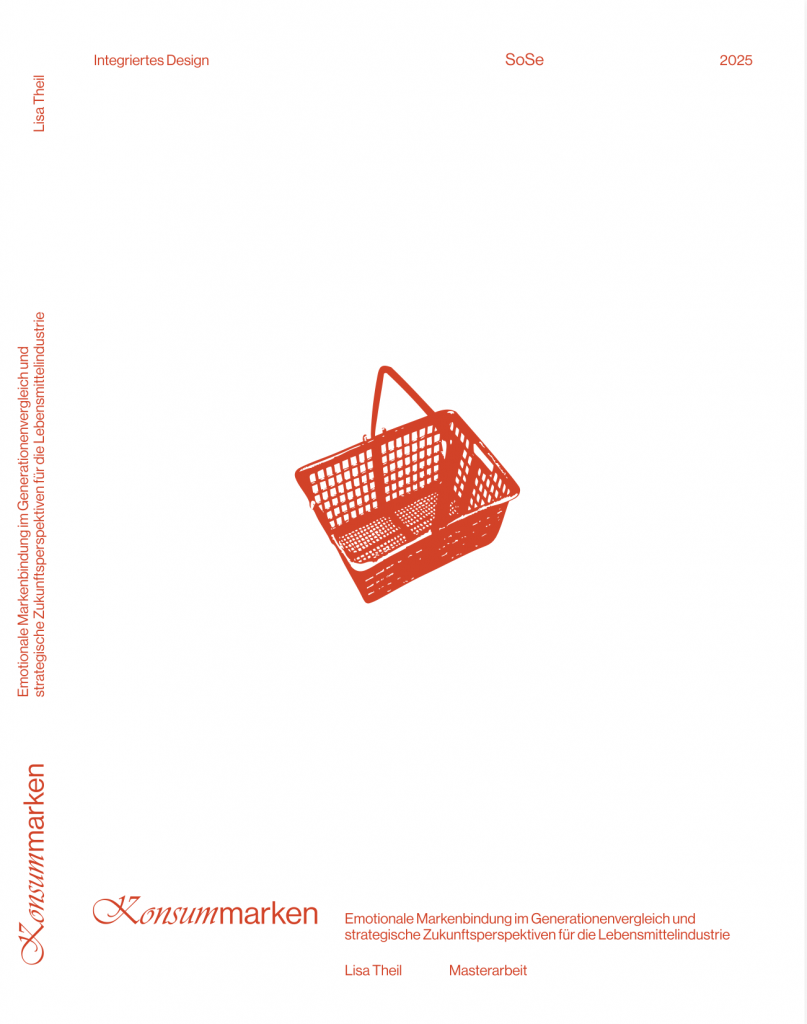
Lisa Theil: “Consumer Brands – Emotional Brand Attachment Across Generations and Strategic Future Perspectives for the Food Industry” (2025)
The master’s thesis “Consumer Brands – Emotional Brand Attachment Across Generations and Strategic Future Perspectives for the Food Industry” by Lisa Theil examines how brands in saturated markets build emotional relationships with consumers and why these remain powerful beyond functional product attributes. Starting from a personal consumption experience, the study develops a systematic analysis of brand loyalty, affect, and identity formation. It combines theoretical approaches to emotion, brand identity, customer experience, and storytelling with a critique of the marketing concept of the “love brand,” proposing instead the more nuanced notion of “brands of affect” to capture the diversity of emotional purchasing motives.
Empirically, the thesis draws on surveys, interviews, and visual ethnography to compare generational consumer cultures from Baby Boomers to Generation Z. The findings reveal clear differences: while older generations tend to be shaped by habit and trust, younger cohorts orient themselves toward sustainability, activism, and digitally mediated brand communication. Brands function as generational identity markers through which values, lifestyles, and expectations about the future are articulated.
Figure: Lisa Theil: “Consumer Brands – Emotional Brand Attachment Across Generations and Strategic Future Perspectives for the Food Industry” (Master’s thesis, HAWK University of Applied Sciences and Arts Hildesheim, Faculty of Design, 2025)
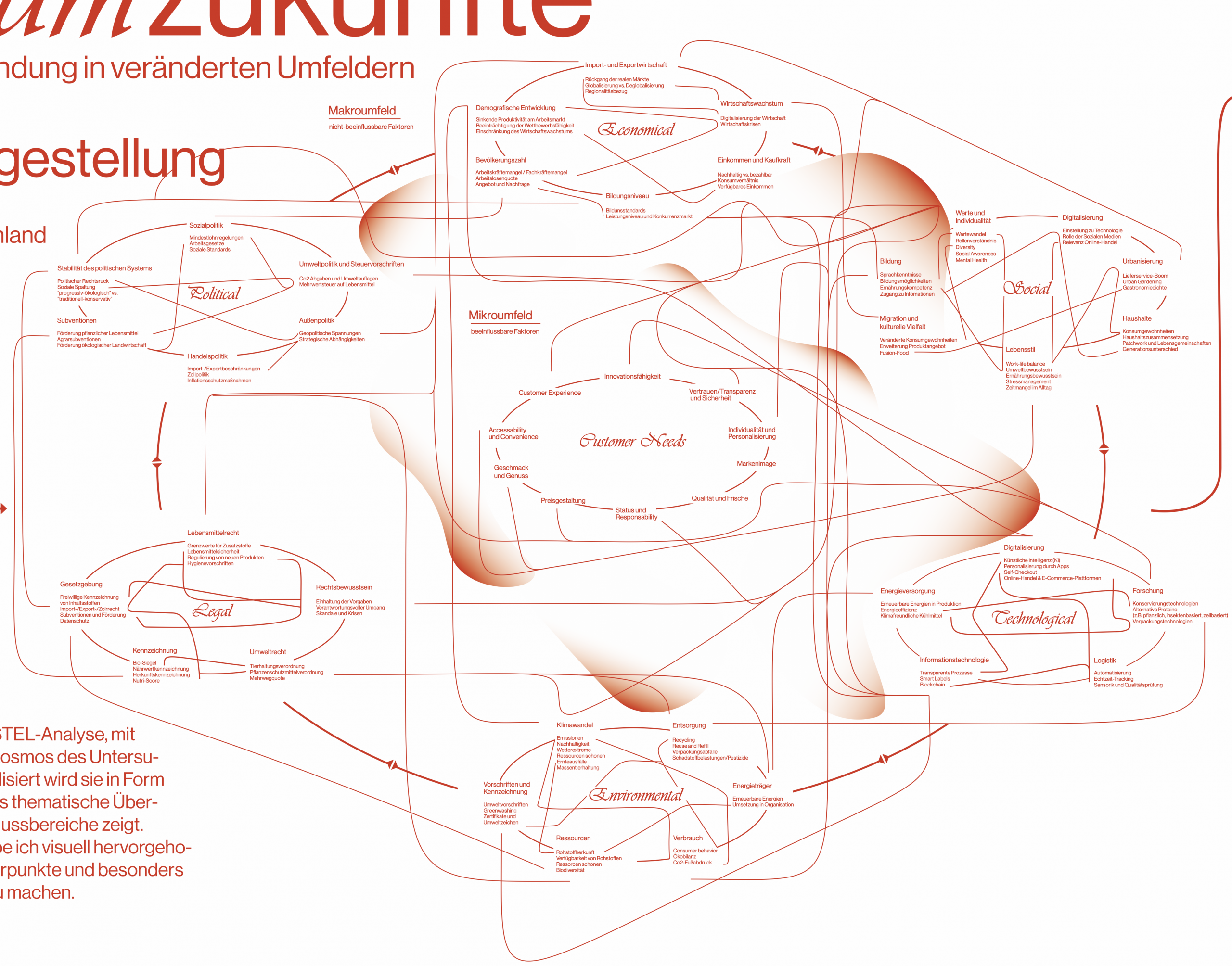
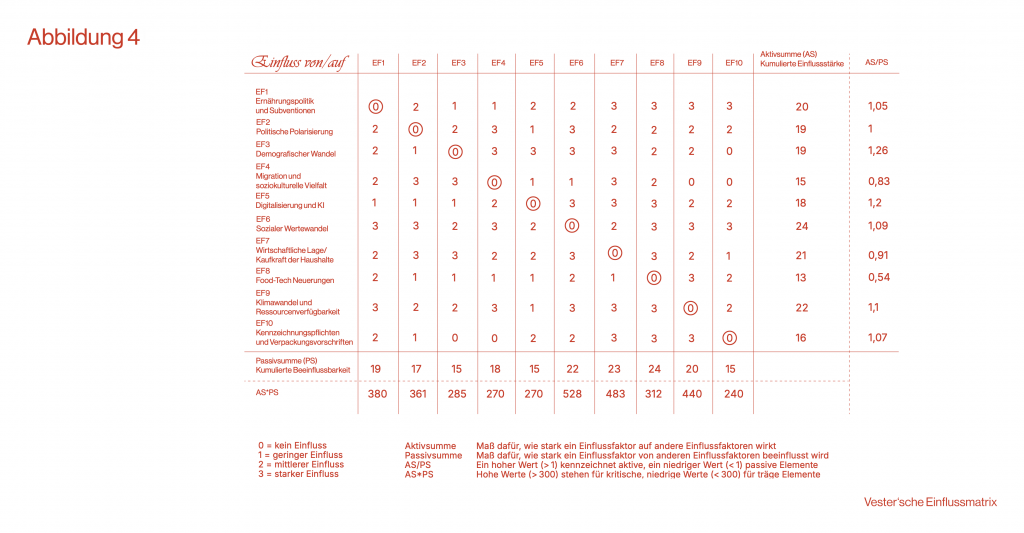
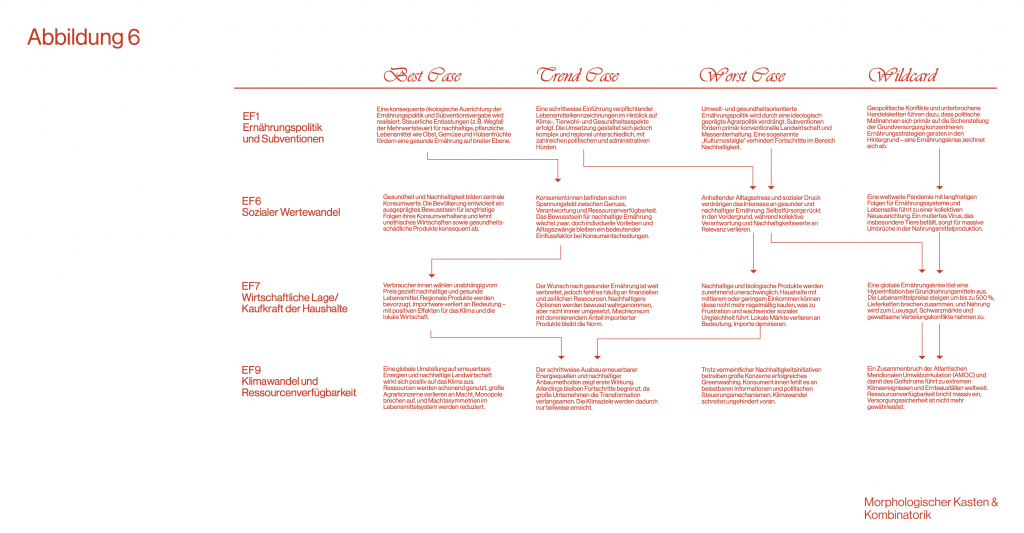
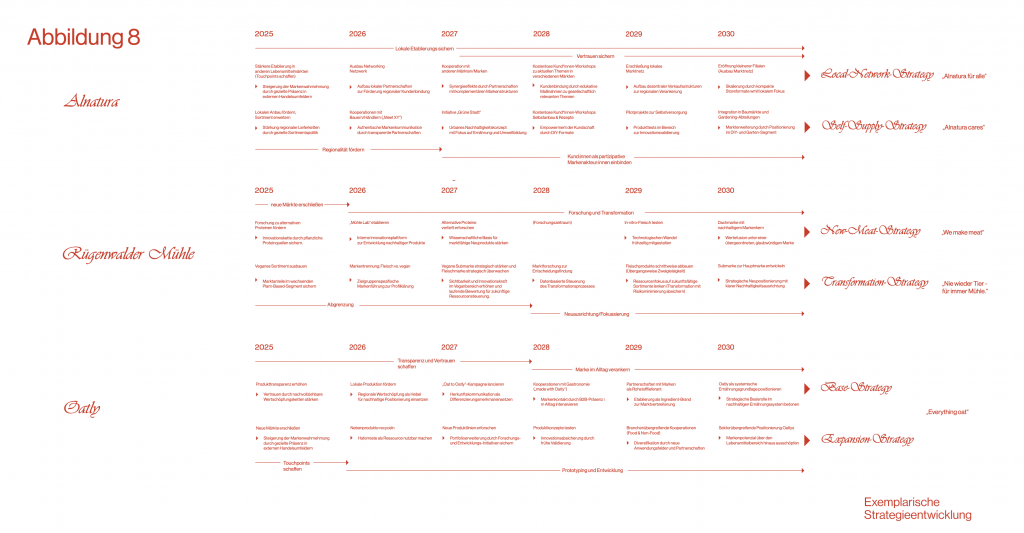
On this basis, Theil employs trend research and scenario planning to develop four possible futures for the German food market in 2045 and derives strategic recommendations for companies. A central conclusion is the need for an adaptive, learning-oriented understanding of strategy that takes ethnographic research seriously and aligns brand management with social, ecological, and technological transformations. Emotional brand attachment thus remains a key driver of success—provided it is cultivated in differentiated, generation-specific, and future-oriented ways.
Lisa Theil: “Konsummarken Emotionale Markenbindung im Generationenvergleich und strategische Ausblicke der Lebensmittelbranche”
Master’s Thesis Project 2025 Supervised by: Prof. Konstantin Haensch, Prof. Sabine Cole
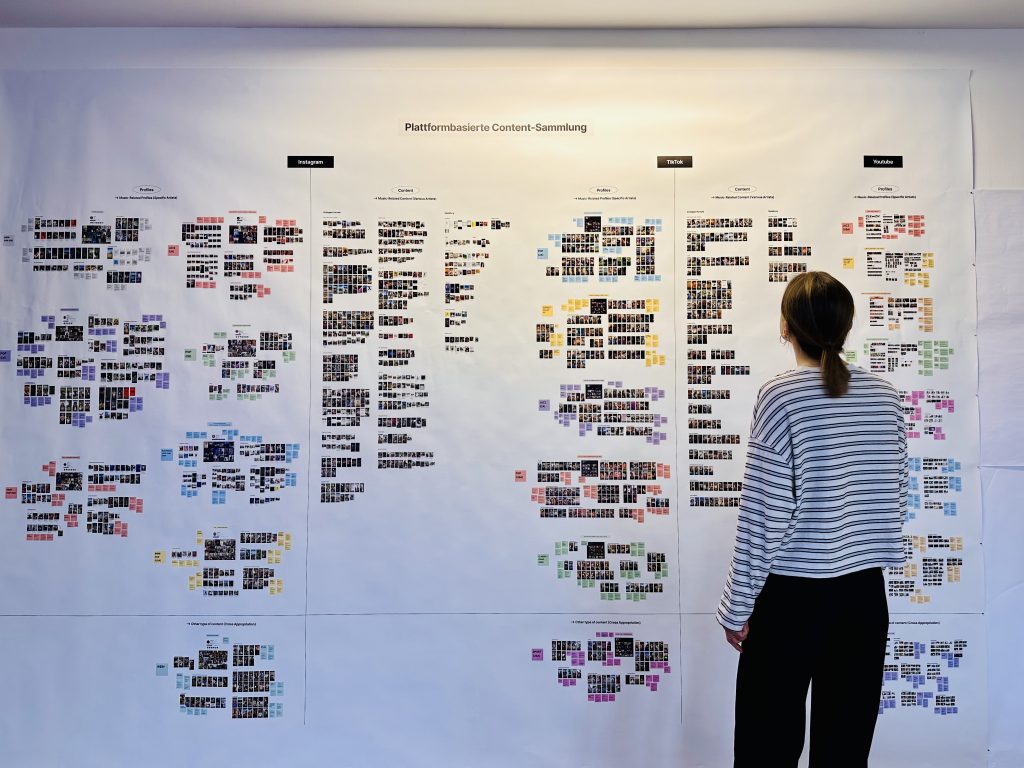
This master’s thesis investigates how content strategies on TikTok can contribute to the visibility of artistic practice in jazz. Situating TikTok within the broader digital transformation of music cultures, the study examines how platform logics, algorithmic structures, and short-form video aesthetics reshape the conditions under which jazz musicians can present their work. Rather than focusing […]
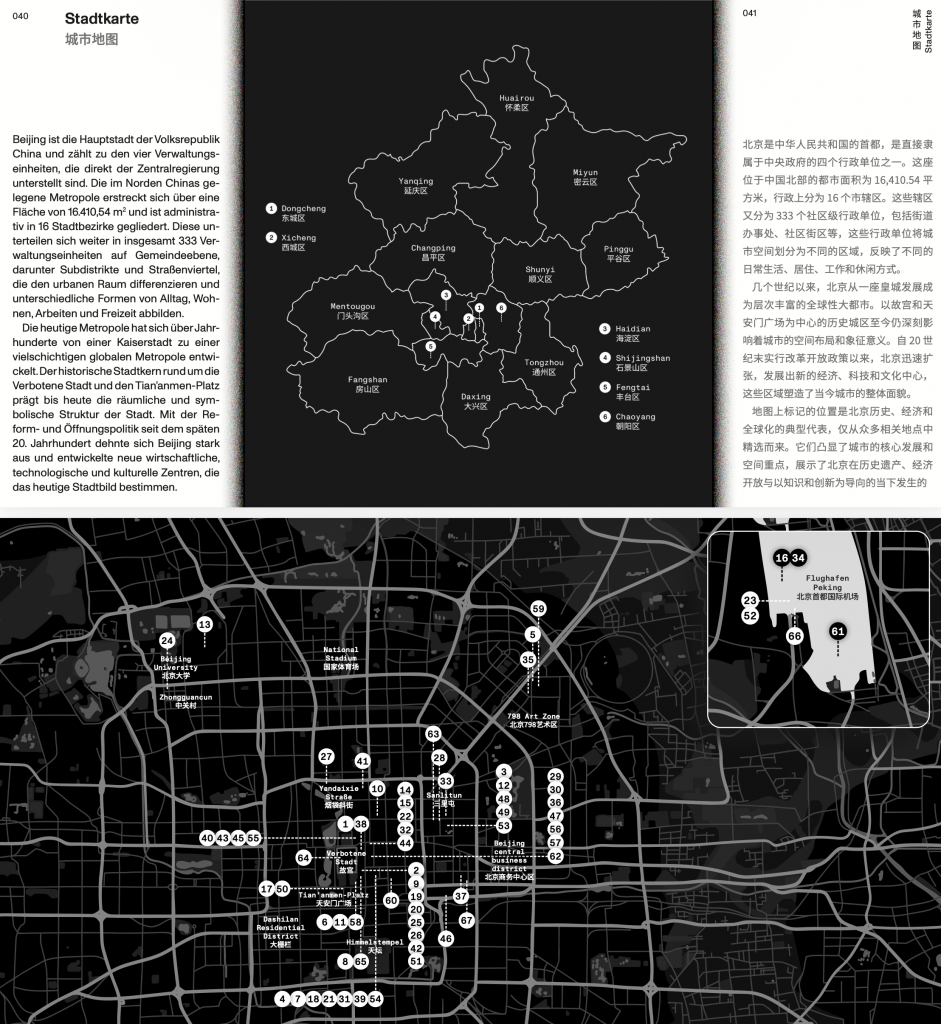
This master’s thesis investigates how design can function as a research practice that makes knowledge in intercultural contexts visible and experientially accessible. Based on the project Concepts Trouvés, which examined English-language terms found in Beijing’s urban commercial landscape, the work reflects on how design ethnography and Research through Design can explicate implicit knowledge embedded in […]
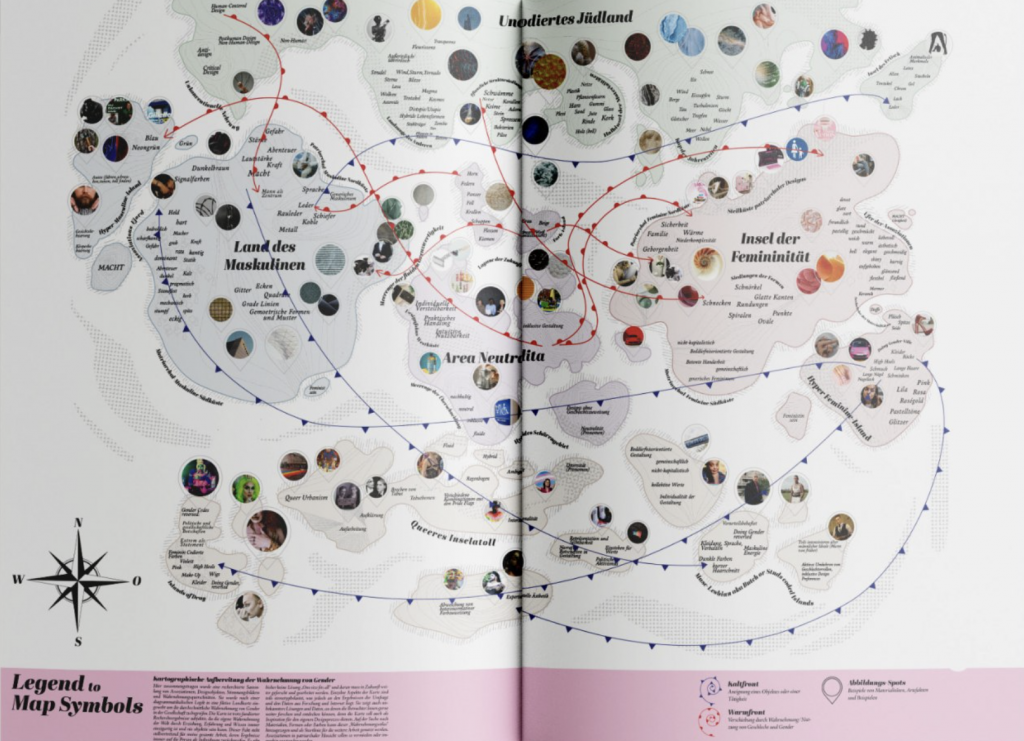
This master’s thesis investigates how patriarchal structures and gender stereotypes are embedded in everyday products, spatial environments, and professional design processes. Combining feminist theory, sociological concepts such as Doing Gender, and contemporary design research, the project analyzes historical genealogies of gendered form, materiality, and usability while grounding these perspectives in an empirical user survey. The […]