Investigating Everyday Interface Cultures and their Hidden Spheres of Production in M.A. Seminars at HAWK Hildesheim: Design Management, Design Strategy, and Research through Design (RtD)
Research at the M.A. Gestaltung program, Faculty of Design, HAWK University of Applied Sciences and Arts (Hildesheim, Germany)
Crafting old cameras is like building time machines for this designer. He combines traditional craftsmanship with modern engineering to ensure that his creations not only look the part but also function seamlessly. His cameras are hand-assembled, with each piece carefully inspected for quality. From vintage-style leatherette finishes to precision-engineered shutters, every element is designed to offer photographers an authentic experience that bridges the gap between past and present.
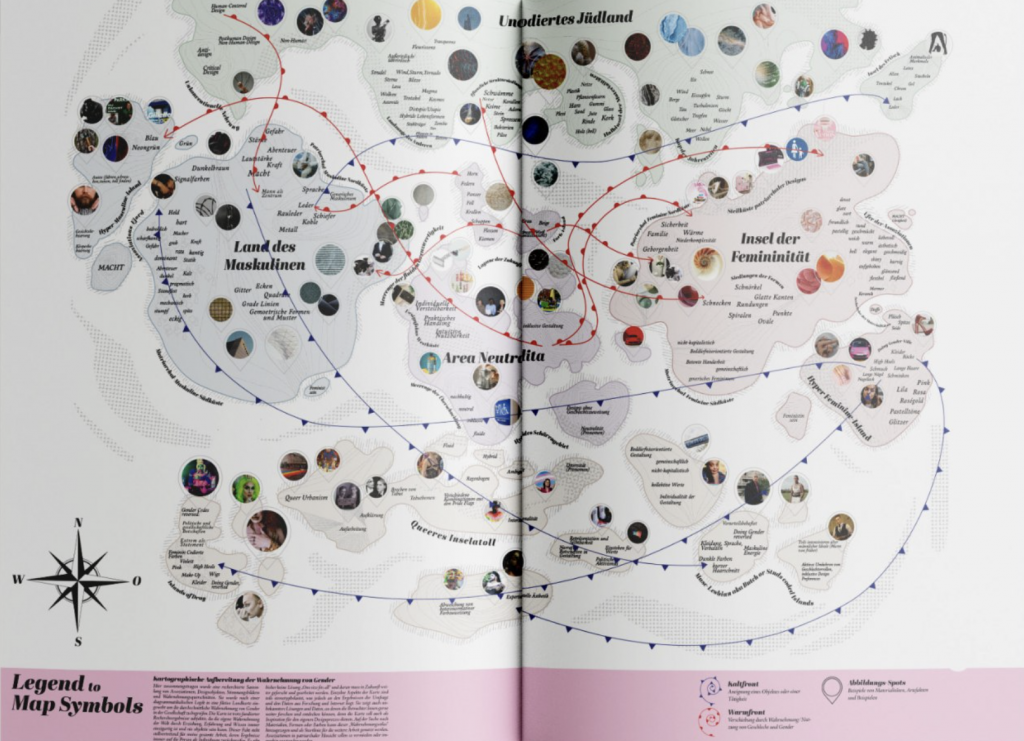
Isabelle Wydra: „The Male Gaze: Patriarchal Structures in Everyday Life and Design Processes with Reference to Product Design“ (2025)
Consumer Culture & Theory, Design Critique
This master’s thesis investigates how patriarchal structures and gender stereotypes are embedded in everyday products, spatial environments, and professional design processes. Combining feminist theory, sociological concepts such as Doing Gender, and contemporary design research, the project analyzes historical genealogies of gendered form, materiality, and usability while grounding these perspectives in an empirical user survey. The […]
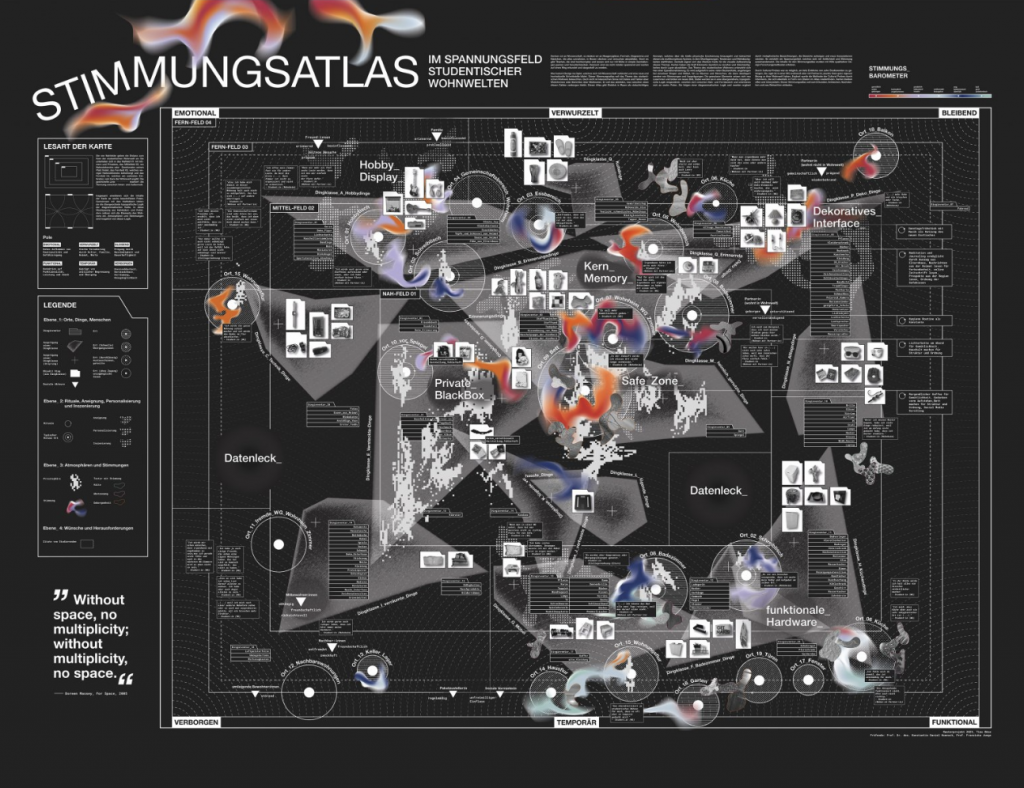
Tina Böse: „Mood Atlas in the Tension Field of Student Living Environments“ (2025)
Design Ethnography/Cultural Probes, Material Cultures
When we think of science, we often picture test tubes, formulas, diagrams, and boxes—frames that contain, categorize, and attempt to represent the world. Yet some topics are highly complex and resist being reduced to simple visualizations. They demand effort to be made legible—and remain no less compelling for it, waiting to be explored and articulated […]
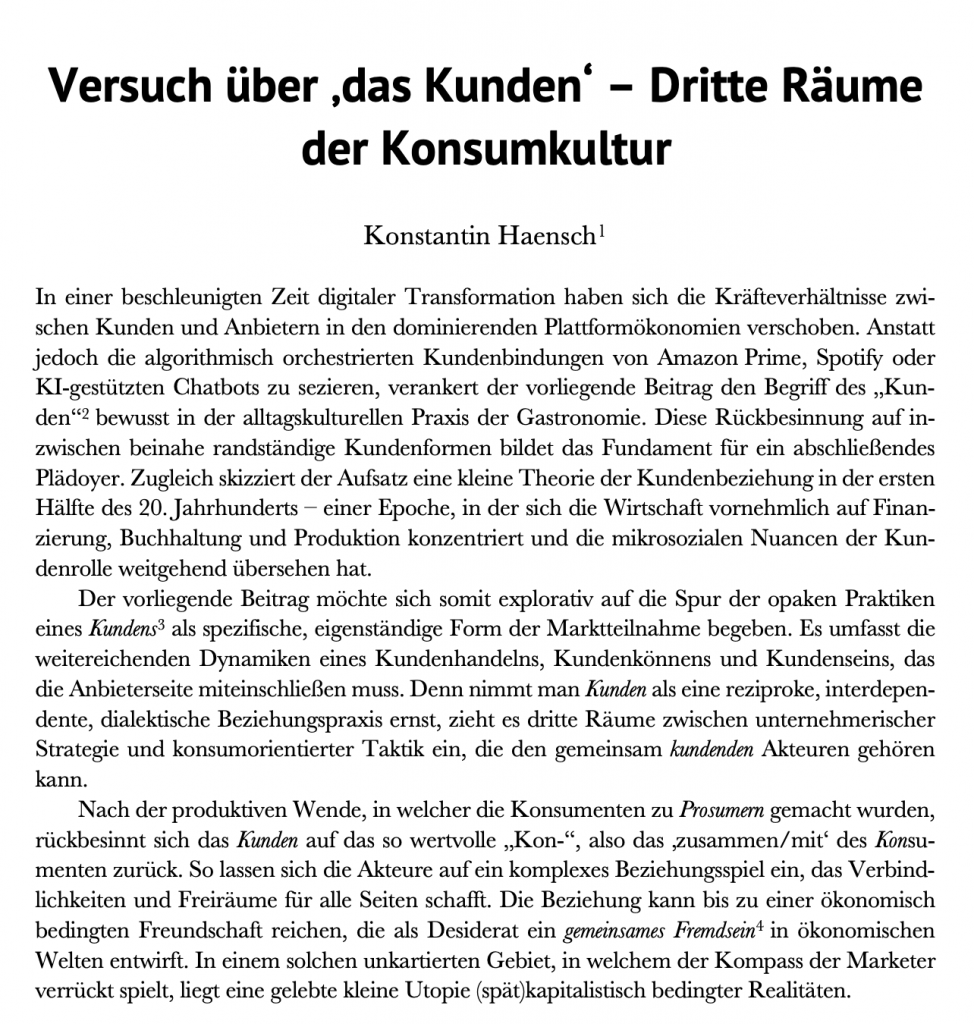
Publication: “Essay on ‘Customering’ – Third Spaces of Consumer Culture” (2025)
Consumer Culture & Theory
In “Essay on ‘Customering’ – Third Spaces of Consumer Culture,” Konstantin Haensch reconceptualizes the “customer” not as a passive consumer or mere transaction partner, but as a participant in an evolving social relationship that unfolds between providers and markets. Drawing on sociology, anthropology, marketing theory, and cultural studies, the article traces how customer relations historically […]