
Cultural Probes as explorative qualitative Method at the Hildesheim Faculty of Design
Hildesheim, 08.02.2026
At HAWK University of Applied Sciences and Arts in Hildesheim, Cultural Probes have become an established and demonstrably effective method within the M.A. program, repeatedly applied in seminar-based projects as well as in Master’s theses to investigate everyday practices in situated, materially anchored ways. In particular, the guiding question—Who Designs our Lifeworlds? Investigating Everyday Interface Cultures and their Hidden Spheres of Production—as pursued in M.A. seminars in Design Management, Design Strategy, and Research through Design (RtD), aligns closely with the probe logic: because probes are designed to elicit lived, often tacit dimensions of interface cultures, they can produce insights into everyday lifeworlds while also opening indirect vantage points onto the comparatively opaque and distributed sphere of everyday production that undergirds them. Beyond teaching, this methodological commitment also informs our research project Domestication of an AI Platform (funded by the MWK—Niedersächsisches Ministerium für Wissenschaft und Kultur), where probes are used to explore how AI systems become normalized in domestic and organizational routines, and how design mediates these processes. Across these contexts, our specific interest concerns the potentials and limits of design as a research practice—especially the degree to which innovative, creative, and theoretically grounded task design within probe kits can extend what becomes knowable, while simultaneously raising questions about interpretive authority, methodological control, and the boundary between elicitation and intervention.
The method originally developed by designers Bill Gaver, Tony Dunne, and Elena Pacenti (1999) has gained popularity in recent years, not only within design research but also in related disciplines—especially in qualitative social and cultural research that is interested in inventive and practice-based ways of producing knowledge (Lury and Wakeford 2012; Boehner, Gaver, and Boucher 2012). Existing at the intersection of scientific design practice and practice-oriented design research, Cultural Probes inherently serve both to inform and inspire. Their epistemic promise is often described less as “capturing what is” than as generating a “richly textured but fragmented” understanding that can provoke design imagination and speculative thinking about what might be (Boehner, Gaver, and Boucher 2012). This quality makes Cultural Probes suitable for projects that aim to achieve research goals as well as designerly development goals—and all the intersections in between. Robertson (2008) notes that a balance must be struck between the informative and inspirational aspects. But there is also the perspective of designers who expressed their concern about the method becoming “over-scientificized,” and called for a return to its inspirational character and playful quality (Gaver et al. 2004). What emerges in this tension between information and inspiration are the unique characteristics that distinguish Cultural Probes as a design-ethnographic method under the paradigm of research through design (Koskinen et al. 2011): Cultural Probes operate both in an operationalized and goal-oriented way, as well as in an exploratory and open-ended manner.
Cultural Probes are meant to (and should) intervene (Müller 2018), providing a research perspective that stands apart from other social and cultural scientific methods, since rather than acting as a passive, observing element, they are actively embedded within the context being studied. As material-supported self-observation and self-documentation, Cultural Probes are thus “like astronomic or surgical probes” (Gaver, Dunne, and Pacenti 1999), sent into the respective life contexts. The absence of the researchers imparts a special added value: while geographic distance between researcher and participant is created and maintained, Cultural Probes can nevertheless “reduce distance” by generating more personal data through the design and individual engagement with the materials in a private (non-laboratory) context, thus producing qualitatively valuable insights (Thoring, Luippold, and Mueller 2013). The method also offers a distinct advantage in facilitating the most time-synchronous connection possible between the situation to be studied and the completion of the Cultural Probes/data collection, ideally minimizing the time gap between situation and reflection (Doppler 2023). These characteristics make Cultural Probes especially suitable for everyday life research—while also raising the methodological question of how the resulting fragments are interpreted and translated into design and/or research outcomes (Boehner et al. 2007).
Initial associations with Cultural Probes are likely to be physical packages containing tasks, equipped with a diary, postcards, and a camera. In the meantime, however, other forms with their own (content-specific) focuses have emerged in the “Probes” field, alongside many derivatives and hybrids (Boehner et al. 2007): for example design probes and empathy probes in user-centered and service design contexts (Mattelmäki 2006), as well as prototypes-as-probes, “technology probes,” and other probe-based interventions in HCI and ubiquitous computing (Hutchinson et al. 2003). The latter are particularly instructive because they show how probe-thinking can be coupled with working artifacts: technology probes are introduced into real-world settings with a triple orientation—(1) learning about users and contexts, (2) field-testing technologies, and (3) inspiring further design (Hutchinson et al. 2003). The original format of Cultural Probes has also been extended to include digital research possibilities (e.g., mobile, platform-based, or app-mediated probe practices), underscoring that “probe-ness” is less a fixed kit-format than a designable relation between tasks, materials, and situated participation. This range demonstrates the potential for diverse approaches and method combinations under the “umbrella of Cultural Probes,” but it also makes visible the interpretive pluralism—and occasional conceptual drift—that has characterized their uptake (Boehner et al. 2007).
However, this potential simultaneously poses the challenge of designing the specific implementation in a way that best serves the research goal. In order for Cultural Probes to deliver their methodological added value, factors such as usability, motivation/fun factor, and the meaningful design for generating the “richest data” (Robertson 2008) must be considered. Those who wish to research as synchronously as possible require Cultural Probes that are practical—for example, small enough to fit in a jacket pocket so that thoughts can be recorded immediately at a bus stop or in a supermarket. If you wish your Cultural Probes to actually be completed—and not remain untouched for the duration of the study—the research must be designed to engage participants and maintain their motivation. And finally, if you want data that both specifically addresses the research question and allows for new and unexpected findings, your Cultural Probes must have a strong theoretical/conceptual foundation, employ appropriate research modes, and be designed in a way—regarding language, form, and materiality—that best supports the research objective. In co-design terms, probes can be understood as one among several “making” approaches: they are especially strong when used early to open up experiential and contextual understanding, while toolkits and prototypes can support later stages of idea generation and testing (Sanders and Stappers 2014). If these conditions are met, Cultural Probes can yield data that enables a “thick description” (Geertz 1987) of the participants’ lifeworlds—while still preserving the productive uncertainty that originally motivated the method (Gaver et al. 2004).
The analysis of Cultural-Probes data depends on the specific sub-methods and chosen research modes. However, generally speaking, data triangulation is recommended—for example, after an initial interpretive analysis by the researchers, findings can be contextualized in subsequent interviews or feedback conversations with participants to enable the most intersubjective interpretation possible and to avoid “discount ethnography” effects (Boehner et al. 2007; Thoring, Luippold, and Mueller 2013). Even when findings from Cultural Probes are translated into overarching concepts at the end of the research, the data do not only serve as an intermediate step towards results, but can themselves be used as outcomes—for instance, by exemplifying the connection between a developed concept and participants’ specific lifeworlds, or by functioning as boundary objects that carry situated knowledge into the design process (Mattelmäki 2006; Sanders and Stappers 2014).
Finally, the growing use of Cultural Probes across cultural contexts also foregrounds questions of translation, ethics, and epistemic authority: what counts as an “evocative” task, what kinds of self-documentation are culturally appropriate, and who gets to interpret the resulting fragments. Recent critiques argue that probe practices can reproduce Eurocentric assumptions unless they are adapted to local epistemologies and participatory norms—calling for a more explicitly decolonial and context-sensitive probe design (Oduaran and Chukwudeh 2021). In this sense, Cultural Probes are not just a technique but a situated methodological stance: they require careful attention to power relations, privacy, reciprocity, and the (shared) meaning-making practices through which “probe returns” become knowledge and design.
Text: Konstantin Haensch and Carolin Sarah Baaske
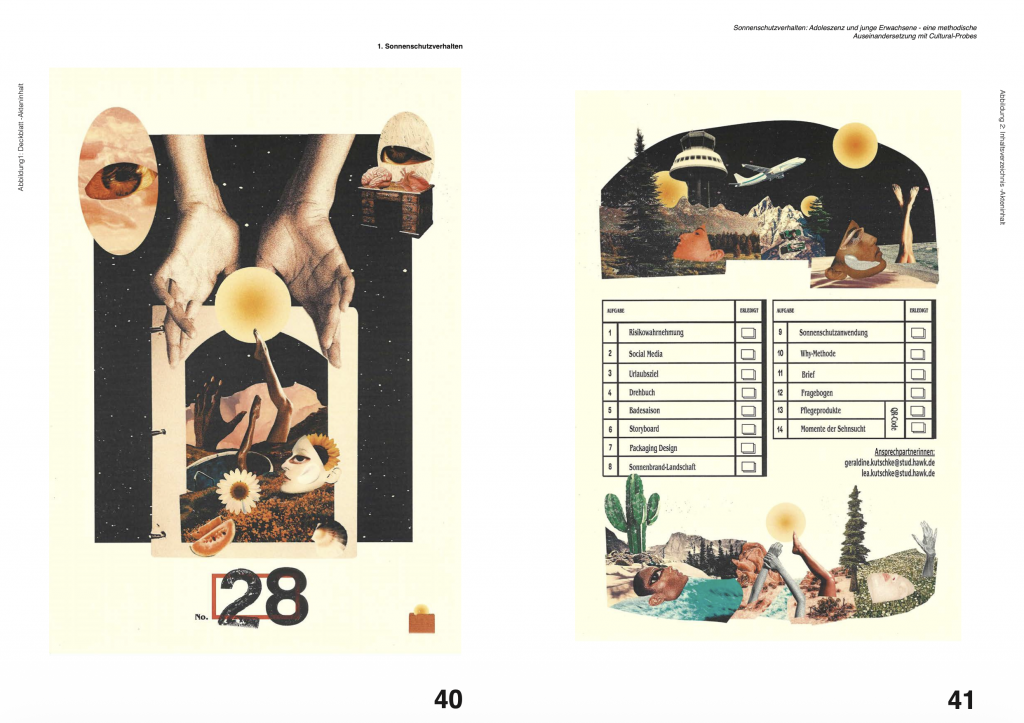
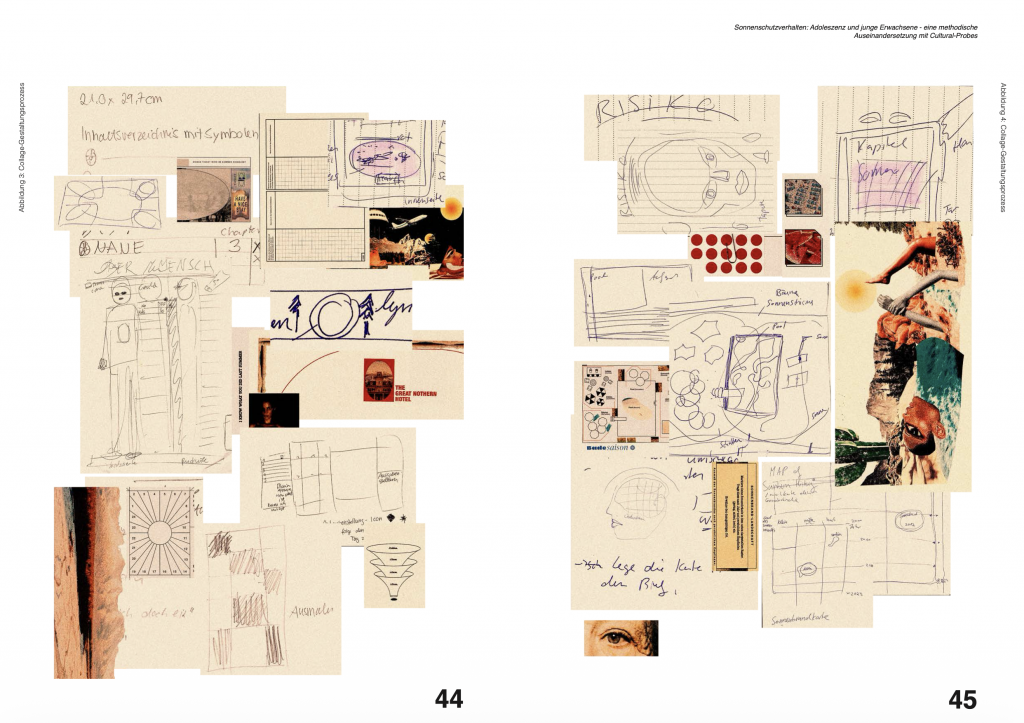
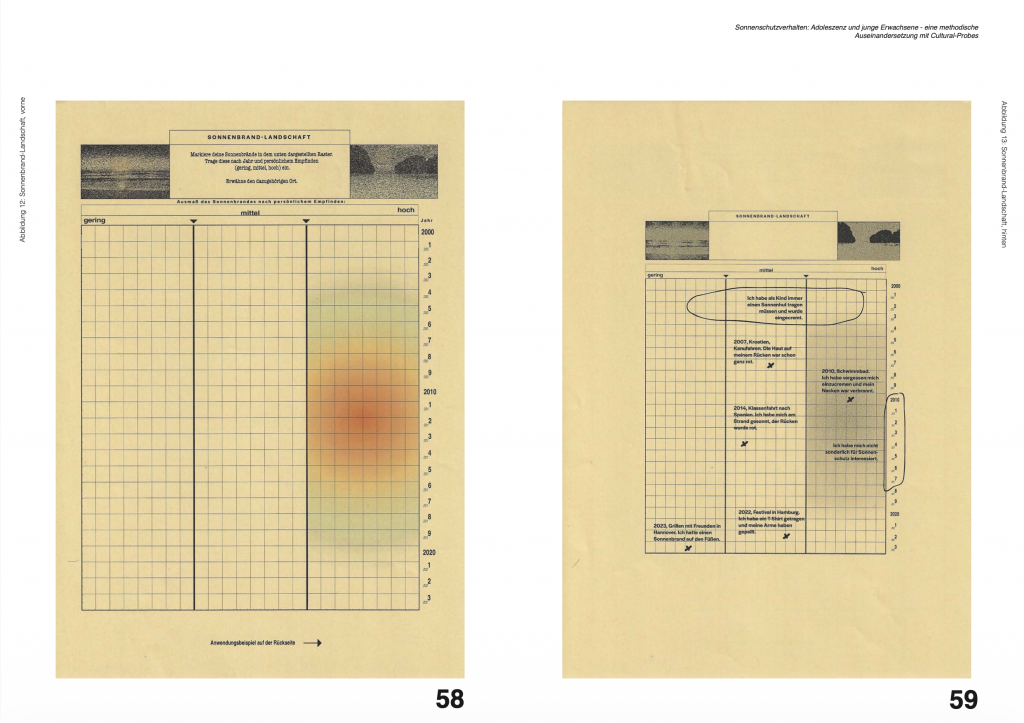
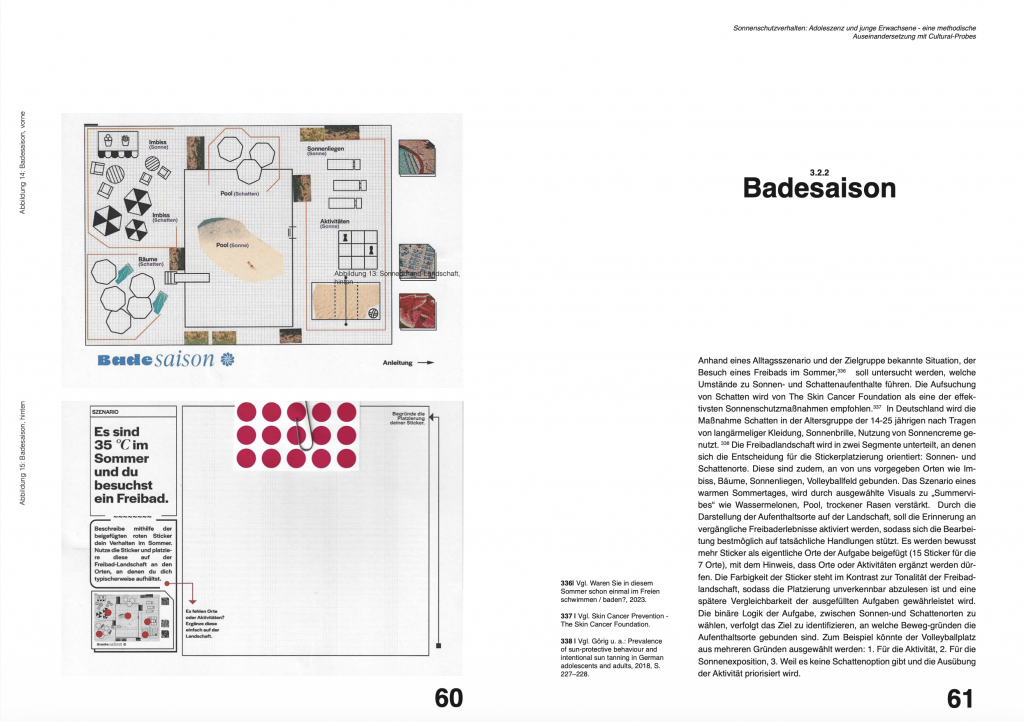
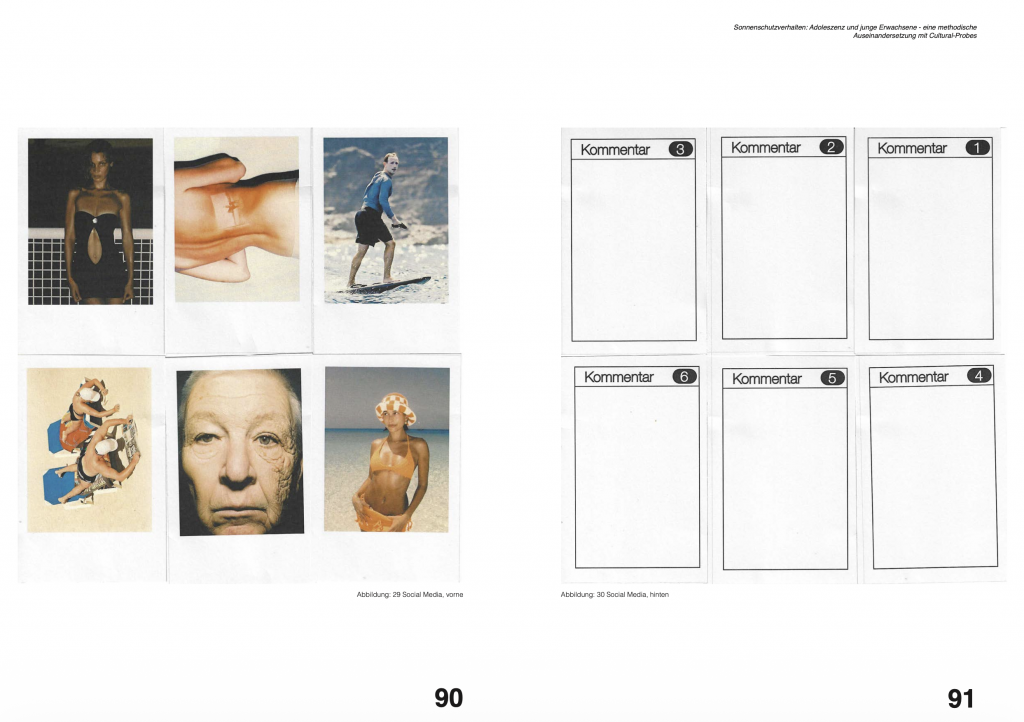
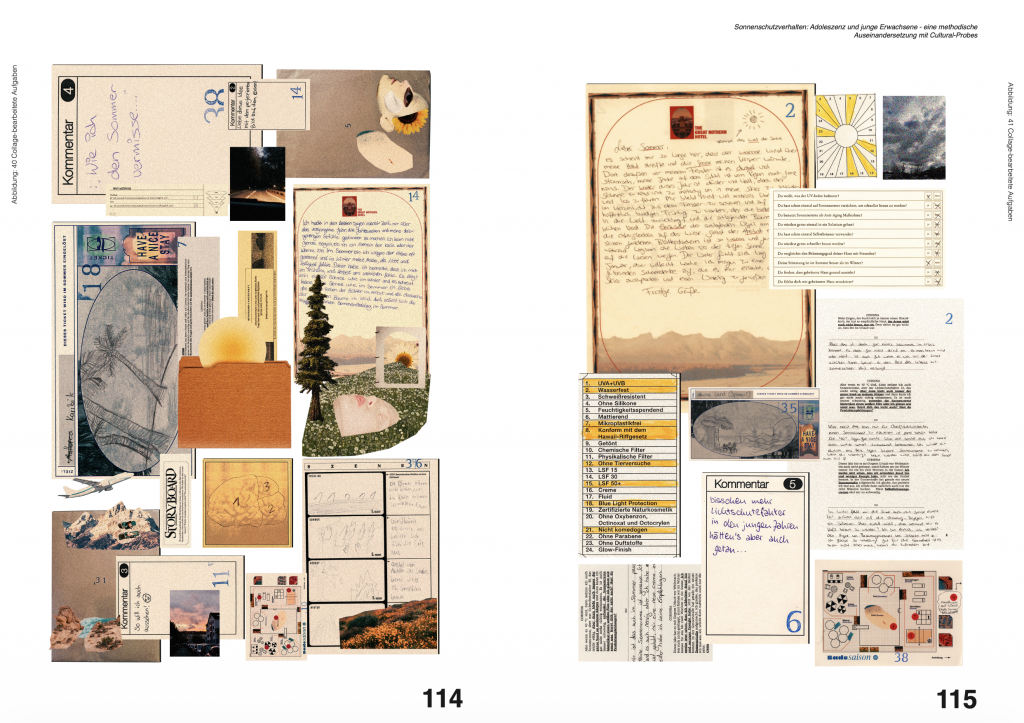
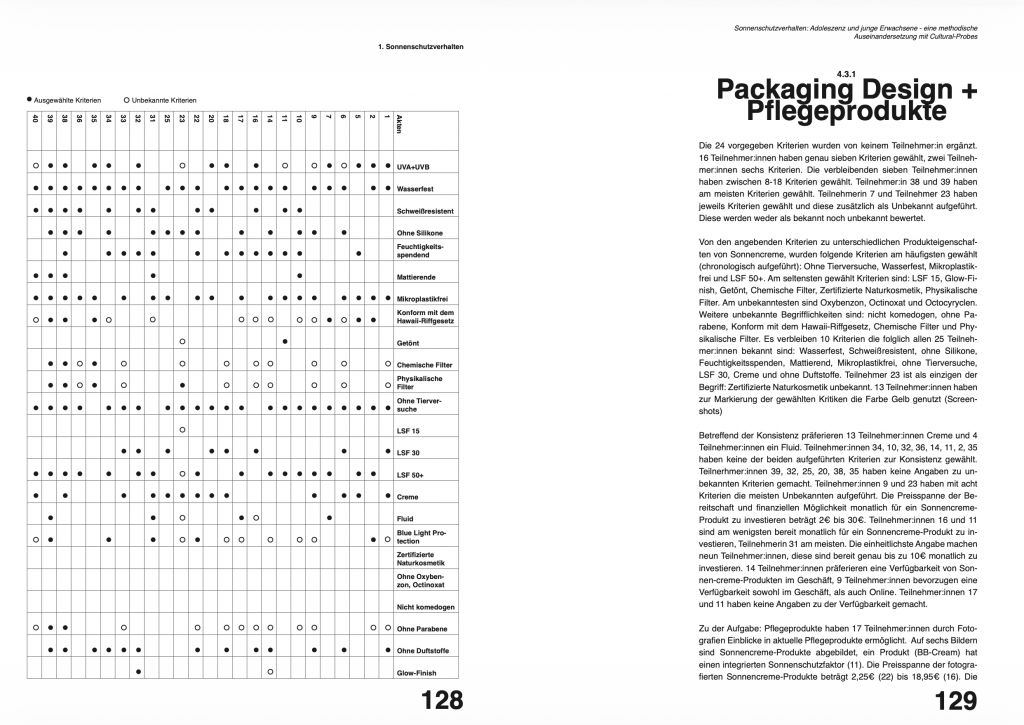
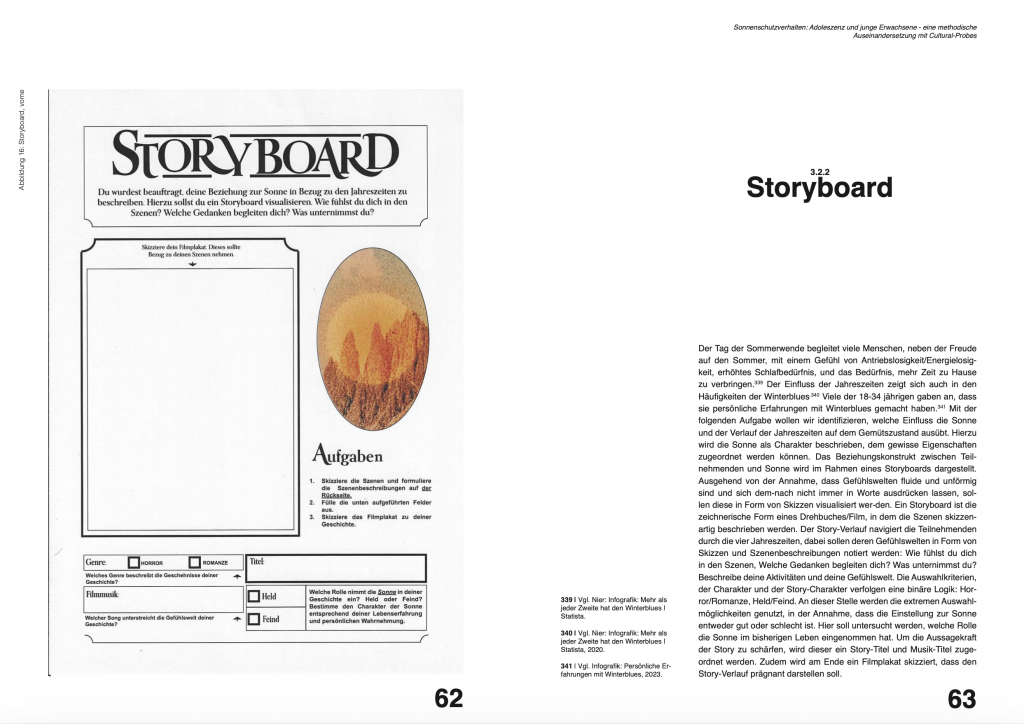
Cultural Probes Examples from the M.A. thesis „Sun Protection Behavior: Adolescence and Young Adults – A methodological Examination of Cultural Probes“ by Lea Kutschke & Geraldine Kutschke (2024)
References
Boehner, Kirsten, William W. Gaver, and Andy Boucher. 2012. “Probes.” In Inventive Methods: The Happening of the Social, edited by Celia Lury and Nina Wakeford, 185–201. London: Routledge.
Boehner, Kirsten, Janet Vertesi, Phoebe Sengers, and Paul Dourish. 2007. “How HCI Interprets the Probes.” In Proceedings of the SIGCHI Conference on Human Factors in Computing Systems (CHI ’07), 1077–1086. New York: ACM.
Doppler, Anja. 2023. “Strategieentwicklung mittels ‘Cultural Probes’.” Bibliothek Forschung und Praxis 47 (2): 286–296.
Gaver, Bill, Tony Dunne, and Elena Pacenti. 1999. “Design: Cultural Probes.” Interactions 6 (1): 21–29.
Gaver, William W., Andy Boucher, Sarah Pennington, and Brendan Walker. 2004. “Cultural Probes and the Value of Uncertainty.” Interactions 11 (5): 53–56.
Geertz, Clifford. 1987. Dichte Beschreibung: Beiträge zum Verstehen kultureller Systeme. Translated by Brigitte Luchesi and Rolf Bindemann. 14th ed. Suhrkamp Taschenbuch Wissenschaft 696. Frankfurt am Main: Suhrkamp.
Hutchinson, Hilary, Wendy Mackay, Bo Westerlund, et al. 2003. “Technology Probes: Inspiring Design for and with Families.” In Proceedings of the SIGCHI Conference on Human Factors in Computing Systems (CHI ’03), 17–24. New York: ACM.
Koskinen, Ilpo, John Zimmerman, Thomas Binder, Johan Redström, and Stephan Wensveen. 2011. Design Research Through Practice: From the Lab, Field, and Showroom. Waltham, MA: Morgan Kaufmann.
Lury, Celia, and Nina Wakeford, eds. 2012. Inventive Methods: The Happening of the Social. London: Routledge.
Mattelmäki, Tuuli. 2006. Design Probes. Publication Series of the University of Art and Design Helsinki A, 69/2006. Helsinki: University of Art and Design Helsinki.
Müller, Frank. 2018. Designethnografie: Methodologie und Praxisbeispiele. Wiesbaden: Springer VS.
Oduaran, Akpovire, and Okechukwu Stephen Chukwudeh. 2021. “Decolonizing Cultural Probes in Ethnographic Research: Perspective of African Scholars.” Journal of Black Studies 52 (7): 736–749.
Robertson, Shanthi K. 2008. “Cultural Probes in Transmigrant Research: A Case Study.” InterActions: UCLA Journal of Education and Information Studies 4 (2): 1–25.
Sanders, Elizabeth B.-N., and Pieter Jan Stappers. 2014. “Probes, Toolkits and Prototypes: Three Approaches to Making in Co-Designing.” CoDesign 10 (1): 5–14.
Thoring, Katja, Carmen Luippold, and Roland M. Mueller. 2013. “Opening the Cultural Probes Box: A Critical Reflection and Analysis of the Cultural Probes Method.” Paper presented at the 5th International Congress of the International Association of Societies of Design Research (IASDR), August 2013.